Tag: Pngbushmissions

  • When Prayers Feel Like Echoes

    I have been prayed over more times than I can count. Hands resting on my shoulders, voices lifting like incense, curling into the air, into the restless hours of the night. I was sent to sleep with ardent prayers for my settling, for peace to take root in my spirit. But I did not settle. I unraveled. I shattered.

    I prayed in desperation, in the rawness of exhaustion and sorrow. I prayed that what I clung to by my fingernails would not slip, would not crash to the ground and shatter beyond repair. I begged for time to rewind, for the future I had built in my heart to remain intact. But time is merciless, and prayers do not always hold back the tide.

    And then, when I realized I was asking too much, I stopped praying for rescue and only pleaded for the pain to end. For sleep to come. For my gut not to twist each morning as I woke up to the nightmare I was living. I prayed for numbness, for silence, for a reprieve from the endless ache.

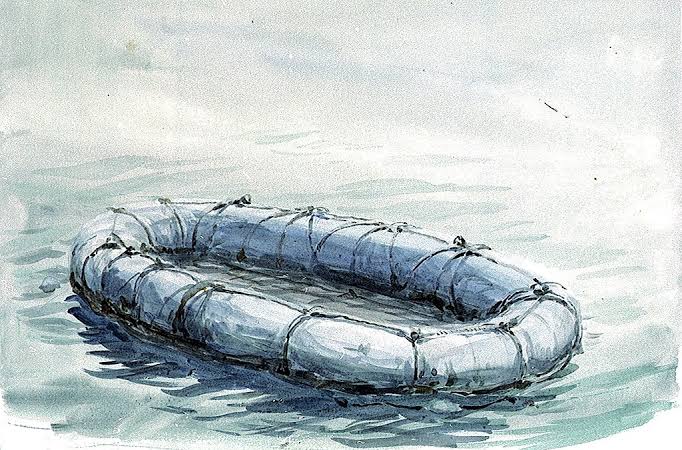
    God sent me lifeboats and I turned each one away. They were not what I wanted. I did not want friendship; I wanted love. I did not want an offer of a job; I wanted my old life. I did not want questions from nosey family members; I wanted answers for why this was happening to me. I did not want a diagnosis; I wanted healing. I did not want consolations; I wanted the prize I had spent years nurturing for a future I had already seen. I did not want their prayers; I wanted his whispers pouring over me as I fell asleep. I wanted what had been mine, whole and unbroken.

    In the bleakest nights, I called home. My family’s voices, steady and sure, became my lifeline. Across the miles, they prayed for me—words spilling over crackling phone lines, reaching into the ache I could not name. They believed when I could not. They called on hope when I had none. And yet, even after I returned home, I prayed for things to be made right. I prayed for restoration, for justice, for a reversal of what had been taken from me.

    Some prayers do not get answered. At least, not in the way we expect. At least, not yet.

    My faith was shaken. My despair was deep. A curse had been spoken over my life, and I felt its weight pressing down, unseen but inescapable. I carried it, even as I whispered prayers into the quiet, wondering if they rose beyond the ceiling, if they faded before they reached the heavens. I searched for signs, for something that might tell me I had not been forgotten.

    And yet—somewhere in the long unraveling of time—light seeped in. A different path emerged, soft-footed, unexpected. It was not the answer I had begged for, not the restoration I had envisioned. But it was something. A quiet shift, a tender mercy. Maybe prayers are answered in ways we do not recognize at first. Maybe hope, slow as the tide, is still coming for me.

    And maybe, just maybe, the lifeboat I had once turned away has circled back—no longer the vessel I fought for, but one I can finally step into, weary, but willing, at last.


  • Phases of Us

    The moon would light my way to you,
    a silver hush, a pearly hue.
    Through shadowed paths and whispering trees,
    we met beneath the midnight breeze.

    The world lay still, the echoes died,
    as time unspooled and opened wide.
    No eyes but hers to see us there,
    soft glow upon your face laid bare.

    She waxed and waned, and so did I,
    bright and bold, then shrinking shy.
    A crescent thin, a silent plea,
    or full and fierce—untamed, set free.

    Yet always, when the dark grew deep,
    when others fell to dream-lost sleep,
    I’d find you where the fireflies gleamed,
    as if the night was how we dreamed.

    Now years have passed, her light remains,
    soft fingers tracing old refrains.
    She pulls the tides, she pulls my mind,
    to moments only we could find.

    For moons will change, but never fade,
    and love, once lit, still holds its shade.

  • The Frustration of Injustice

    There is a weight that comes with working in a place where justice bends to power, where laws exist but do not always protect, where officials wield decisions like weapons, deciding—on a whim—who stays and who goes. A place where the price of efficiency is not diligence, but money slipped into the right hands.

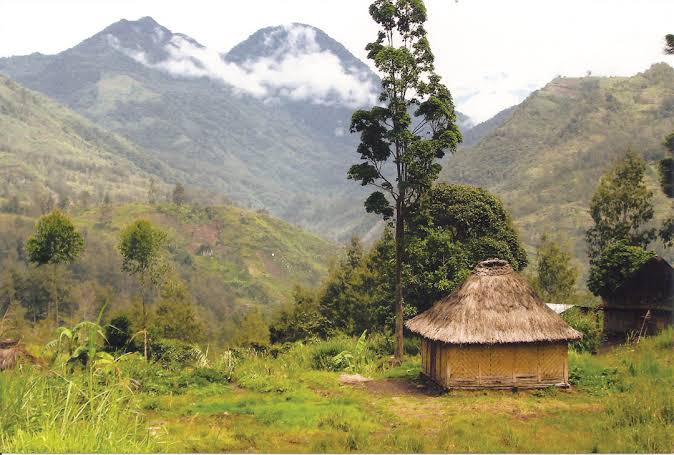
    Papua New Guinea is breathtaking in its beauty, but beneath its sweeping mountains and winding rivers, beneath the warmth of its people, lies a system tangled in red tape, where progress is often at the mercy of corruption. You learn quickly that rules are not fixed but fluid, bending to influence, shifting with unseen negotiations. A visa may be granted, or it may not. A permit may be approved, or it may disappear into the abyss of a cluttered desk, unless you know the right person to call, the right hands to grease.

    The frustration gnaws at you. For the family waiting for medical supplies that are held up at customs until someone is “properly thanked.” For the woman seeking justice for the violence she endured, only to be told that her case will move forward when she can pay the officer’s “fuel allowance.” For the child whose education is determined not by merit, but by the depth of their family’s pockets.

    And yet, somehow, people persist.

    They find the cracks in the system, the rare officials who are honest, the loopholes that make things work. They become fluent in the language of negotiation, learning who to ask, when to push, when to wait. They build relationships, they strategize, they endure. Not because they accept the corruption, but because walking away would mean leaving people behind.

    It is a delicate dance—this battle against injustice. Too much resistance, and the doors close. Too little, and nothing changes. So they walk the line, pushing where they can, swallowing their anger when they must, keeping their eyes fixed on what matters most: the people they came to help.

    There are victories, even in the midst of the struggle. The medical supplies that finally arrive, the child who gets their education, the woman who, against all odds, finds justice. And those moments make the fight worth it.

    Hope in PNG is not naïve. It is not the kind that ignores the weight of corruption or pretends the system will change overnight. It is the hope that comes with knowing that even when justice is slow, even when fairness is bought rather than granted, there are still those who refuse to walk away. They stay. They fight. They make it work. Because if they don’t, who will?

  • The Weight of Community

    Missionary work is often spoken of in terms of sacrifice—leaving behind the familiar, stepping into the unknown, giving of oneself for a higher purpose. What is less discussed is the complexity of the community itself—the way relationships are not only formed but also scrutinized, the way expectations press in from all sides, and the way personal lives can become the subject of unwanted discussion.

    I arrived open-hearted, eager to contribute, ready to learn. But I quickly discovered that life among missionaries was not just about the work; it was about navigating an intricate web of expectations, where personal boundaries were often blurred. Questions came freely, sometimes under the guise of concern, other times with a quiet insistence that made it clear they were not really questions at all. Where was I headed? What were my long-term plans? Was I committed to staying? These were not simple curiosities—they carried weight, an unspoken pressure to declare intentions before I had even found my footing.

    My relationships, too, became a subject of discussion beyond my control. Conversations I had not yet had for myself were already being speculated on in forums where I was unprepared to address them. Older missionaries—some with good intentions, others with a sense of authority—pried into matters I would have preferred to keep private. They dissected my choices, offered unsolicited advice, and sometimes spoke as though they had a stake in decisions that belonged to me alone.

    I wanted to be helpful, to contribute, to prove that I belonged. But my efforts were not always met with encouragement. At times, my willingness to step in and assist was seen not as a strength but as something to be tempered—as if I needed to be reminded of my place. I learned that offering help did not always mean being welcomed. Sometimes, it was taken as a challenge, as if my presence unsettled the unspoken order of things.

    And yet, even in the midst of these challenges, there were those who brought light. Kind souls—often from outside the circles I was part of—offered gentle conversations, safe places where I could be honest about my struggles without fear of judgment. They checked in, brought quiet understanding, and reminded me that not everyone operated by the same unspoken rules. When the weight of expectations became too much, they provided sanctuary. They were the ones who saw me not as a project to be managed, but as a person to be cared for.

    Looking back, I do not fault those who asked too much of me, who pried where they shouldn’t have, who unknowingly added to my burdens. They were part of a system that had shaped them, just as it had begun to shape me. But I see now that support is not just about expectation—it is about presence. It is about listening without demanding answers, offering guidance without insisting on control, and creating space for growth rather than forcing a path.

    And for those who did that—for those who simply sat with me, walked alongside me, and reminded me that I was not alone—I will always be grateful.

  • The Quiet Power of Kindness


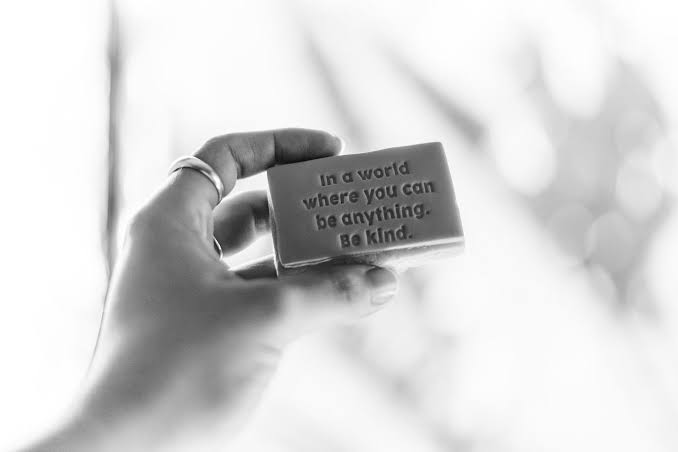
    It costs nothing, yet its impact is immeasurable. It leaves no visible trace, yet it lingers in the heart long after it is given. Kindness is not grand or showy; it does not demand attention. It is the quiet force that holds the world together, stitching unseen wounds and softening the sharp edges of life.

    We often think of kindness as a response to visible need—a hand extended to someone who has stumbled, a comforting word to someone in obvious distress. But the truth is, most struggles are silent. The colleague who snaps in frustration may be carrying the weight of a sleepless night. The stranger who bumps into you without apology might be lost in grief. The friend who cancels plans yet again may be battling unseen exhaustion. Pain does not always announce itself. And so, kindness must not be conditional upon it.

    To be kind is to recognize that everyone carries burdens we cannot see. It is to extend gentleness, not because it has been earned, but because it is needed. A simple smile, a word of encouragement, a moment of patience—these are the smallest of gestures, yet they have the power to shift the course of a day, or even a life.

    We live in a world that often rewards efficiency over empathy, where busyness is mistaken for importance and where kindness can feel like an afterthought. But what if we placed it at the forefront? What if we made it a habit, not just an impulse? What if kindness became our first instinct, rather than something we offer when it is convenient?

    We may never know the full impact of the kindness we extend. A kind word spoken today might be the thing someone holds onto for years. A moment of grace might be the reason someone believes in goodness again.

    The beauty of kindness is that it does not require us to understand another’s struggle fully; it only asks that we respond with care.

    So let us be kind, not only when it is easy, not only when the need is obvious, but always. Because if we are not kind to each other, who will be?

  • Resilience: The long journey home

    Resilience is not just survival. It is not just enduring. It is not just standing upright beneath a weight that should have crushed me.

    For years, I thought resilience meant suppressing my pain, swallowing my shame, and moving forward without flinching. I thought it meant being strong enough to endure rejection, failure, and loss without breaking. But I have learned that true resilience is not about how much I can bear—it is about how much I can release.

    I have carried so much shame.

    The shame of rejection. Of not being chosen. Of waiting for someone to come good, only to be met with silence. The shame of being a puppet in someone else’s game, of being used, discarded, and dismissed when I sought answers, when I demanded reparations.

    The shame of being too introverted for the role I was expected to play. Of feeling alien in an environment that assaulted my senses. The shame of longing for beauty in a world that expected me to accept filth. The shame of exhaustion, of needing rest when I was told to push through. The shame of being let down by friends, of realizing they would not—could not—fight for me the way I had fought for them.

    And worst of all, the shame of feeling like even God had turned His back on me.

    I came home broken—physically, emotionally, spiritually. And the voices of the faithful told me it was my own fault. “Oh ye of little faith,” they said, as though faith alone should have been enough to keep me from collapsing under the weight of it all.

    And so I carried even more shame.

    But resilience is about unlearning that shame. It is about seeing the truth: that I was not weak, only human. That I was not unworthy, only wounded. That I did not fail—I survived.

    Trauma does not just leave bruises on the heart; it seeps into the mind, into the very way I see the world. It left me paralyzed, unable to make plans, unable to picture a future. It taught me that hope was dangerous, that expectations only led to disappointment. And in the moments I needed connection the most, it kept me locked in silence.

    I see it now.

    I see how I lashed out in my own pain when silence was all I received in return. I see how I longed for certainty, for clarity, for direction, while someone else was frozen in fear, unable to answer the questions I so desperately needed resolved. I see how trauma response was meeting trauma response, and we only ever hurt each other more.

    And now I lay it down.

    The shame. The guilt. The need for answers. The desire for reparations that will never come.

    I do not need their apology to heal. I do not need their recognition to be whole. I do not need permission to exist fully, freely, without shame.

    Resilience is about creating a home in myself where I am not judged, abandoned, or rejected. It is about carrying that home with me so I am no longer at anyone else’s mercy. And in that home, I have found that God was never the one who turned away from me.

    I had mistaken the cruelty of people for the absence of God. I had let the failures of churches convince me that He had failed me too. But He was always there—in the quiet, in the stillness, in the moments I thought I was alone.

    God is not a church. He is not a system. He is not an institution that protects its own at the expense of the wounded. He is not the voices that dismissed me. He is not the ones who looked the other way.

    He is the quiet whisper in my heart. He is the one who saw every injustice, every betrayal, every tear. And He is the one who is still calling me—not to penance, not to suffering, not to proving my worth, but to freedom.

    I am not what happened to me.

    I am not the rejection. I am not the silence. I am not the failures of others to see my worth.

    I am here.

    I am healing.

    I am whole.

    And I was always, always loved.

  • The Love That Ruined Me

    They say you never forget your first love.

    I wish they were wrong.

    It would be easier to move through the world untouched by the memory of you, unmarked by the love we shared, free of the knowing. But I am not free. I am wrecked, ruined, rewritten by a love so deep, so consuming, that it still burns beneath my skin, long after you have gone.

    You were my soulmate. And I was yours.

    I don’t say that lightly. I don’t say that in wistful nostalgia, looking back through rose-colored glass. I say it with the weight of every whispered moment, every stolen glance, every aching hour spent waiting for the moment we could be alone. The way our souls moved in rhythm, finding each other across crowded rooms, through the cacophony of obligations and expectations.

    I gave you everything. And for so long, I believed you would give me everything in return.

    I waited. I hoped. I prayed.

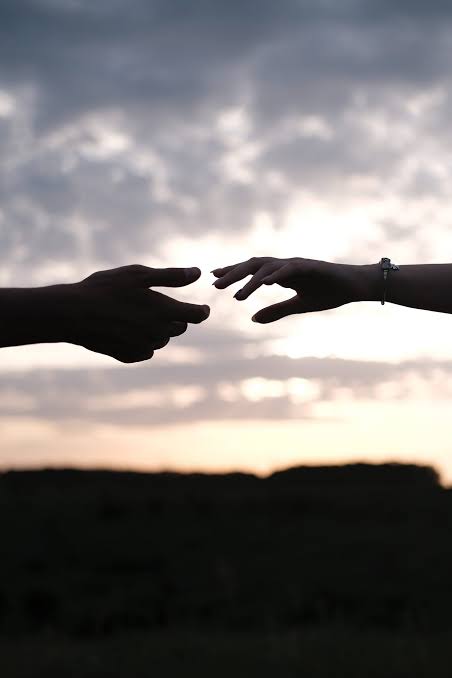
    I stood at the edge of our love with my hands outstretched, waiting for you to take them, to pull me into forever. To say, You are mine, and I am yours, and I will choose you, no matter what it takes.

    But you never did.

    Instead, we lived in the liminal space between what we were and what we were allowed to be. Sneaking kisses under the moon when no one was watching. Walking just a little too far ahead of the others on group trips, letting our fingers brush, our hearts race. Speaking in code, in glances, in the language of longing that only we understood.

    You met my family. I met yours. We fit. Perfectly. Seamlessly.

    And yet, we were never allowed to fit.

    There were always eyes. Always whispers. Always the unspoken but ever-present expectations—never be seen alone, never step outside the bounds, never tarnish the name of the mission, never bring shame. They said it was about honor, about wisdom, about protecting reputations. But it felt like chains.

    If we had been anywhere else in the world, we would have dated like normal people. We would have sat across from each other in coffee shops, taken long drives with no destination, spent lazy afternoons wrapped in each other’s arms without guilt.

    And maybe, in that world, you would have chosen me.

    But we weren’t in that world.

    We were in this one.

    And in this world, you couldn’t make the same sacrifices for me that I made for you.

    I have tried to tell myself that I understand. That it wasn’t personal. That it wasn’t because I wasn’t enough, or because you didn’t love me with the same ferocity that I loved you. But deep down, I don’t believe that.

    Because I know what I gave. I know what I lost. I know how many times I reached across the void, sent my signals into the night, hoping you would see them, hoping you would answer.

    You never did.

    And now, I watch you live the life that should have been ours. With her.

    I tell myself not to look. Not to check. Not to see.

    But how do you not look at the wreckage of your soul?

    How do you not feel the ripples of a love so deep that even now, even after everything, a part of you is still waiting for him to reach back?

    Even just for friendship.

    Even though you know, deep down, that would never be enough.

    Because it was never meant to end this way.

    You were my first love. I was yours. And you don’t ever forget your first.

    I have tried to untangle myself from the clutches of this grief. I have tried to bury it, to smother it, to tell myself that I have moved on.

    But my body remembers.It remembers the way your hands traced the curve of my back, the way your breath warmed my skin on quiet nights beneath the stars. It remembers the safety of your arms, the rhythm of your heartbeat against mine, the way you whispered my name like it was a prayer.

    And so it betrays me.

    With every full moon, I am back in your embrace, bathed in silver light, swaying to the music of the night.

    With every wave that glistens under the sun, I remember the way your eyes caught the light, the way your laughter rippled through the air, bright and golden.

    With every rainfall, I am transported to the nights we stood together, soaked and laughing, the world around us fading as we clung to each other.

    Even as I long to forget, my body refuses.

    It keeps you alive in the scent of damp earth, in the brush of wind against my cheek, in the bloom of every flower that dares to exist in a world without you.

    And so I grieve.

    Not just for what was, but for what will always be—the love that ruined me, the love that still lingers, the love that even now, I am not sure I want to let go.

  • The Fairytale

    In the mission field, love was never a quiet thing. It had to be declared, announced, and sanctioned by the watching world. You couldn’t simply love someone in peace. No, in the Christian bubble, every courtship came with rules: doors left ajar, group dates, older, married Christians serving as chaperones, and the constant hum of approval—or disapproval—from the community.

    When a couple decided to date, it wasn’t a private exchange of words. It was an official proclamation, a declaration of intent that wasn’t just about getting to know each other but about preparing for marriage. The announcement turned heads and opened conversations. It solidified their relationship as a public venture, a parade of certainty. From that moment, everyone understood their trajectory: this wasn’t casual. They were moving toward a wedding, and everyone was invited to watch the show.

    I remember my friends’ glowing faces as they stepped into this process, radiating joy as their paths unfolded neatly before them. Their happiness was splashed across international publications, love stories chronicled with photographs against tropical backdrops, smiles brighter than the midday sun. I wanted to be happy for them—truly, I did—but every congratulations felt like a weight pressing down on my chest. Because after the applause for them came the sideways glance at me, and the question I grew to dread: When is it your turn?

    Their love stories were so… tidy. So precise. I envied their certainty. They moved with an intentionality I craved, a decisiveness that eluded me. My own love felt like a tangle of roots—deep and unyielding, but always caught on something unseen. I scoffed at the open doors and group dates, the announcements and the ceremonies of approval. But inside, I was unraveling. I wanted what they had.

    I had my wedding planned, of course. Not in reality, but in the soft corners of my mind, where the months of the year stretch and shrink and my future looped around itself like an infinite thread. I knew the names of my children, their personalities already alive in my imagination. I had my guest list drafted, the speeches half-written. I wasn’t just in love; I was living our future before it could take shape.

    But we were two worlds trying to find a middle ground. His love was rooted in this place—its harsh roads, its endless needs, its deep calls for his presence. My love was a yearning to be chosen above all of that, to be the one thing he couldn’t live without. Each day felt like a balancing act, an attempt to bridge the gap between us while the land itself seemed to widen it.

    And then came the moment I gave him an ultimatum: me or PNG. I thought I was drawing a line that would bring clarity, but instead, I drew a line that broke us apart. He chose PNG.

    It’s a strange thing, heartbreak. It doesn’t just pierce you once; it echoes. It reverberates. For years, I sent messages into the void, desperate to reach across the chasm I had created. Each day of silence was another crack in the foundation of my heart. I never blamed him—how could I? He was perfect. But I resented the world that had made me feel so small, the people who watched and judged, the women who followed the rules and got their perfect endings.

    Looking back, I see how much I was shaped by purity culture, by the relentless pressure to conform, to be good enough, to fit into a mold that wasn’t made for me. The open-door fairytales were beautiful, but they were also stifling, their perfection a knife to my gut.

    The lesson? Perhaps it’s that love, real love, doesn’t need an audience. It doesn’t need announcements or approval. And yet, it’s also not enough to ignore the differences that divide us. Sometimes, love burns brightly in the tension between two worlds, but it can’t always survive the heat.I still hold onto those dreams— the reminders of a future that could have been, a love that once was. And maybe, just maybe, they’re proof that even in the messiness, even in the heartbreak, the story was worth living.

  • A heart left in PNG

    There’s a beauty to life on the mission field that defies words. It is not found in the obvious, but in the quiet, sacred moments that linger like a melody. It is the kindness of strangers who appear when you least expect it, arms full of gifts from their gardens—a bunch of bananas, a fresh pineapple, a smile that reaches their eyes. It is the shared silence over a pot of kaukau, the quiet prayers spoken in unity under a blanket of stars, and the rustling of the wind through tall grass as if the earth itself is breathing alongside you.

    In Papua New Guinea, joy wears a different face. It is a choir in perfect harmony on a church lawn, voices rising and falling in a hymn that carries your soul somewhere beyond yourself. It is the riot of flowers along the roadside – lupines laying out welcome mats at the foot of mountains and frangipani spilling their perfume into the humid air. It is the adventure of traveling to hidden places, untouched by the heavy hand of progress, where lakes gleam like glass and mountains stand as sentinels to a simpler, purer world.

    Life there is steeped in depth and creativity, born of necessity. There are no quick fixes, no dashes to the store when the eggs run out. Instead, there is the art of making do or doing without—kneading dough by hand, stitching torn fabric, or crafting beauty from what is at hand. The slow rhythm of this life teaches patience and gratitude in a way that no sermon ever could.

    But there is another side to this life, one that comes with its own burdens. In PNG, my white skin attracted a kind of celebrity I never asked for. It brought curious stares, unspoken assumptions, and a weight of expectation that made solitude both a blessing and a curse. There were days I felt like an alien, isolated by my otherness, even as I worked to belong. Yet, even “home”, my otherness continues to separate me.

    Repatriation is a strange and silent grief. For many returning missionaries, the pain of leaving the field is like losing a part of themselves. Often, it comes without choice—due to health concerns, immigration issues, or even a global pandemic. Other times, it is voluntary, but even then, the grief clings to you. The bustling, convenient modern world feels sterile in comparison. Shopping malls, with their bright lights and endless choices, seem filled with people wandering aimlessly, unaware that another world lives inside of you.

    In this new life, fast food replaces slow, intentional meals, and busyness fills every corner of existence. Yet my heart often longs for the simplicity of the mission field, where life was stripped bare and real, where every day carried purpose and where relationships held weight and meaning.

    Coming “home” is never just a return; it is an ache, a fracture, a longing for what was left behind. It is stepping into a world of privilege and distraction while carrying the weight of everything you have seen, heard, and felt. I look around at my life now, at the conveniences and comforts, and I feel both grateful and hollow.

    The grief of leaving PNG has made me more intentional in my relationships. I treasure the time I spend with family and friends, aware that life in this world is fleeting and fragmented. Yet, there are days I wonder if my heart will ever truly return from PNG. It feels as though I left it there, tucked beneath the hills, washed in the rushing mountain springs, or carried away in the chorus of an early morning lotu.

    Life on the mission field changes you. It strips away the trivial and teaches you what it means to live with both hands open—to give, to love, and to trust in a way that feels almost impossible now. And though I wrestle with grief, though the weight of returning feels insurmountable some days, I cling to the hope that this loss has a purpose. That even in the aching, I am being refined.

    For those of us who have left the field, it’s important to name the grief and acknowledge its depth. To be kind to ourselves in this season of in-between. To know that our hearts, though fractured, still beat with purpose. And to trust that God, who called us to these places and experiences, is still working all things for good—even when we feel like pieces of ourselves remain scattered across the world.I

    may never retrieve the part of my heart that remains in PNG. Perhaps I’m not meant to. Not yet. Perhaps it is a reminder of the sacredness of the life I lived there—a life that taught me the truest meaning of beauty, creativity, and love. And in the end, perhaps that is enough.

  • Mail Order Bride

    At first glance, it seemed like a story of purpose and calling—a young woman, eager to serve, stepping into the mission field with hopes of making a difference. But beneath the surface, there was a far more painful truth: she wasn’t chosen for her creativity, her passion, or her ability to connect with others. She was chosen because of what someone else imagined her to be, not for who she truly was. She was recruited because she was single and someone saw her as a match for another missionary already in the field.

    From the start, something didn’t sit right. There was an unspoken tension in the air that she couldn’t quite place. People told her, with confident smiles, that she was needed, that she would make a difference, but her instincts told her otherwise. Still, against her better judgment, she agreed, believing she was called for her own gifts, her own heart, her own purpose.

    When she arrived, everything felt out of place. The land itself—raw, untamed—seemed to press against her, every sound and smell, every sight, unfamiliar and abrasive. And the people? Well, some were kind, but many others turned away from her, making her feel like an outsider in the very place she was supposed to call home. The weight of judgment was unrelenting, and the sense of isolation clung to her like a shadow.

    But then, there was love. A love so deep, so intoxicating, that it pulled her in, despite her misgivings. He was steady, grounded in the land that felt foreign to her. She was restless, free-spirited, yearning for something beyond the confines of this harsh reality. Together, they created a world in the cracks of time—moments stolen under the stars, laughter shared in secret places. She felt seen, truly seen, and in those moments, she became someone more than she ever thought possible. The creativity that flowed through her was like a river, untouched and pure, brought to life by the way he loved her. It was as if the world fell away, and she was finally home, at least for a moment.

    But love, as all-consuming as it was, couldn’t undo the reality that they were two people bound to different worlds. She couldn’t stay in a place that felt suffocating, where every part of her soul screamed to escape. He couldn’t leave behind the life he had built, the land that had shaped him. No matter how deeply they loved each other, no matter how desperately they tried to make it work, the divide between them was too wide to bridge.

    And then, the truth—the truth she hadn’t known, or refused to see—came crashing down. She wasn’t there for her gifts or her talents. She wasn’t there to serve, to contribute, to make a difference. She had been brought there because someone saw her as a partner, a potential wife for someone else. Her hesitations had been brushed off, her doubts dismissed. She had been cast into a role that was never hers to play.

    The weight of that betrayal broke her, and the loss of the love they had built only made the wound deeper. She had trusted, had poured herself into something that was never meant to be hers. Her creativity, her passion, her desire to make a difference—all of it had been secondary to someone else’s plan.

    Even now, years later, she still feels the sting of that realization. She can’t escape the bitterness, the knowledge that she was never valued for who she truly was. She was never given the chance to shine on her own terms. The love they shared, as beautiful and as transformative as it was, will always be tainted by the deceit that led her to that place in the first place.

    For those who support missionaries, there is a lesson in her story. Don’t play matchmaker. Don’t reduce someone to a pawn in your idea of what their life should be. Don’t let your desire for control overshadow their individuality, their agency. The damage this kind of manipulation causes isn’t just a matter of broken relationships—it’s a matter of shattered dreams, of people left questioning their worth, wondering if they were ever truly seen.

    Her heart still carries the weight of what could have been, the love that might have been enough if only the world had been kinder. She is grateful for the love they shared, for the way it made her feel alive, but the wound of betrayal will always remain, a scar she will carry for the rest of her life. Her story is one of loss—not just of love, but of the parts of herself that were never allowed to flourish.

    For anyone sending people into the mission field, remember this: they are not mere instruments to fill roles or meet expectations. They are people with their own passions, their own purposes, and their own worth. Don’t try to control their story. Let them write it for themselves, because the cost of doing otherwise is far too high.