Tag: Png

  • Faith in the Fog

    I used to think faith looked like fire —
    bright, bold, unmistakable.
    I thought it would always burn hot in my chest, always feel like certainty, always sound like singing.

    But lately, faith feels more like fog.

    Not gone, just… harder to hold.

    I still believe — but now, belief looks quieter. It looks like choosing to stay
    even when I don’t feel anything. Even when the sky doesn’t answer back.


    I wake up some mornings and whisper,
    “Are You still here?”
    Not because I doubt He exists,
    but because I can’t feel Him
    like I used to.

    There was a time when I would hear Him
    in every song,
    see Him in every sunrise,
    sense Him in every silent moment.

    Now, the silence feels heavier.
    Now, prayer feels like writing letters
    with no return address.

    And honestly, sometimes I feel like I’ve been left on read —
    not just by heaven,
    but by the people I trusted most.


    Rejection came from the places I never expected.
    Friends who turned away
    when I was too much, too broken, too inconvenient.
    A soulmate who wouldn’t walk with me
    through the messy truth of what happened —
    the trauma, the abuse, the parts of my story that aren’t tidy enough for newsletters.

    I was left to carry it alone.
    Ashamed.
    Exposed.
    Unchosen.

    And yet —
    even in all that,
    God never turned His face from me.

    He didn’t flinch.
    He didn’t walk away.
    He never said, “This is too much.”


    That’s the thing about fog.
    You can’t always see who’s standing beside you.

    But that doesn’t mean you’re alone.


    Faith is not the absence of fog.
    It’s the decision to walk through it anyway.

    Not with boldness, always —
    sometimes just with breath.

    Sometimes faith is a single step.
    A whispered prayer.
    A choice to keep the light on,
    even when the room feels empty.


    God isn’t less present in the fog.
    He’s just… less obvious.

    Like breath on glass,
    like wind through branches —
    still there.
    Still moving.
    Still holding.


    There’s a verse I come back to, over and over:

    “For we live by faith, not by sight.” (2 Corinthians 5:7)

    It’s easier to quote than to live.
    But maybe that’s the whole point.

    Maybe real faith is forged here —
    in the grey,
    in the waiting,
    in the long nights where nothing makes sense,
    but we show up anyway.


    I don’t have clarity today.
    But I do have a candle.
    I do have breath.
    I do have the ache that reminds me I’m still alive
    and somehow, still reaching for God
    even when I can’t feel Him reach back.

    And maybe that’s enough for now.

  • The Weight of Feeling

    There are those who move through the world untouched, passing through sorrow like shadows through a field. They hear stories but do not listen, nod but do not absorb. They stand at the edges of suffering, an arm’s length away, unmoved by the quiet devastation beneath another’s skin.

    And then, there are those who feel.

    To hold empathy is to carry a burden no one else sees. It is to wake with a heart already heavy, to step into a room and know, instantly, what is unspoken. It is to watch a stranger’s face and feel the tremor beneath their smile. It is to stand before the hurting and ache as if their pain were your own.

    I have always felt too much.

    Even as a child, I would watch the shifting tide of a conversation and sense the undercurrents beneath. I would hear the hesitation, the faltering breath, the words unsaid—and they would settle inside me, pressing into my ribs, demanding to be known. I could not turn away. I could not close my eyes and walk on.

    And yet, the world does not feel the same way.

    I have seen how quickly people look away, how swiftly they dismiss what is inconvenient. I have watched cruelty be excused, discomfort be avoided, wounds be ignored simply because tending to them requires effort. And I have stood in the wreckage of it all, bewildered, wondering how it is possible to care so little.

    In the moments when I needed tenderness, when I stood open and raw, offering my grief, my fear, my truth—I have been met with indifference. I have known what it is to speak into silence, to stretch out my hands only to find emptiness where comfort should be.

    I do not understand how people live so lightly, how they step past suffering without a backward glance. I do not know what it is to feel nothing.

    I only know what it is to carry too much.

    To be the one who notices. The one who lingers. The one who stays up at night replaying a conversation, feeling another’s sorrow as if it were my own. The one who grieves for things long past, for people I will never see again, for the wounds I could not heal.

    I wonder sometimes if it is a gift or a curse.

    To feel the weight of the world when no one else seems to bear it. To be the only one standing in the wreckage while others walk on, untouched. To hold, always, the ache of what could have been, what should have been, if only others had chosen kindness.

    But if the choice is between numbness and this—this aching, breaking, unrelenting knowing—then I will bear it.

    Because someone has to.

    And if not me, then who?

  • The Plank Between Us

    Nothing prepares you for grief that is still breathing.

    For the weight of loss when there is no funeral, no finality, no neat ending that lets you fold it away.

    For grieving someone who is still out there, still walking, still laughing, still moving through the world—but not with you.

    We stood at the edge for so long, both of us knowing, both of us feeling the wind shake beneath our feet. But neither of us could walk the plank. Neither of us could be the first to let go. So we stayed, not together, not apart, unraveling thread by thread, until one day, the rope was gone and we were left with nothing but the empty space between us.

    I thought that would be the worst of it.

    But nothing prepares you for the way the world closes in, how it folds over itself, muffling color, dulling sound. How familiar places become graveyards of memory, how the air itself feels thick with absence.
    And nothing—nothing—prepares you for the knife that twists deeper when you watch from the sidelines.

    Watching him become everything I hoped, dreamed, begged for. Watching him rise into the man I always knew he could be—just not for me. Watching him step into the life I imagined, the one we spoke of in whispers, the one I ached for, the one I would have followed him into blindfolded—except now, someone else stands beside him.

    The world does not teach you what to do with that kind of pain.

    No one tells you how to breathe when the air is thick with all you lost. How to move forward when your shadow still stretches back toward him. How to stand steady when every step feels like walking on the ghost of what was.

    The love does not go away.

    It stays, an ache beneath the ribs, a quiet hum in the background of a new life. It does not demand. It does not fade. It simply is. A part of you, woven in, stitched between the person you were and the person you are still becoming.

    But you learn.

    You grow around it.

    You stretch, you expand, you widen your arms to hold new love, new laughter, new pieces of a life that was never meant to stop. You learn that grief does not shrink, but you grow. You make space for both the ache and the joy.

    And one day, you find yourself standing in the light again, not because you stopped loving, but because you learned how to love more.

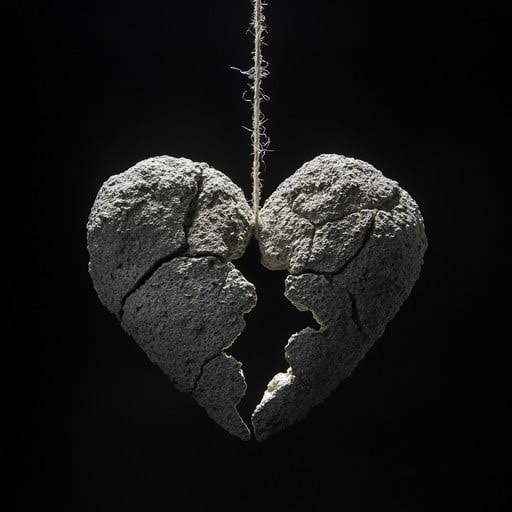
    Because the heart—when broken, when shattered, when left behind—does not shrink.

    It learns to hold more than it ever thought it could.

  • The Weight of the World

    Mission work is not for the faint of heart. It is a calling, a burden, a quiet surrender to something greater than oneself. It is the work of bridge-builders, of healers, of those who carry light into the forgotten corners of the world.

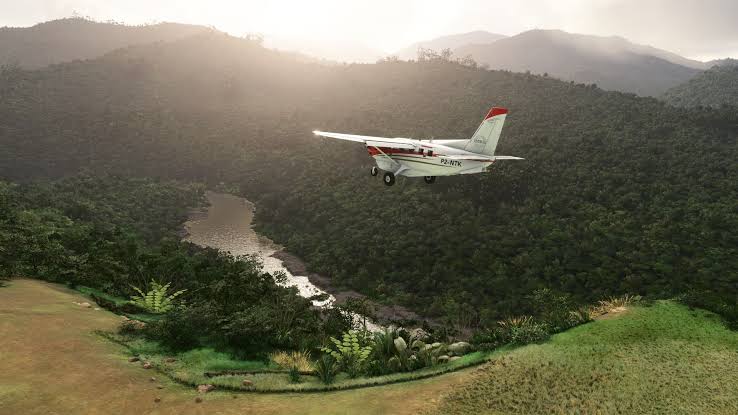
    In places where language flickers like a candle in the wind, missionaries hold the flame steady. They transcribe, they preserve, they speak words aloud so they will not be lost to time. They build schools where none stood before, open clinics where sickness once reigned unchecked. They fly where roads do not go, where rivers run deep and untamed, carrying hope in the belly of their planes. They carve airstrips from the wilderness, taming mountains and marshlands so that when the moment comes—when the radio crackles with an urgent plea, when a life hangs in the balance—help can reach the unreachable.

    They do not just bring supplies; they bring rescue. They lift the wounded from places the world has forgotten, from villages where accusations turn deadly, where hands meant for work are bound instead, where the innocent suffer beneath suspicion’s shadow. They go where others will not, stepping into the darkness to pull life from its grasp. And they do it not for recognition, nor for wealth, but because it must be done.

    Without them, what would be left? A world where voices fade, where knowledge is buried beneath the weight of progress, where the sick suffer without a hand to hold, without medicine to ease the pain.

    And yet, in a world brimming with noise about about the sins of those who came before, the work of missions is met with skepticism. The word itself is tangled in narratives of oppression, of histories rewritten to erase the good, to cast a shadow over the selflessness of those who go. But are these voices not speaking from places of comfort, from lives built on the very institutions they now scorn? They do not see the child grasping a pencil for the first time, the mother receiving life-saving medicine, the elder hearing their own tongue written on paper, preserved from vanishing forever.

    I walked those roads, I stood in those villages, I listened to the murmurs of a culture that was not my own, and I felt the weight of being an outsider. I had come to serve, to help, to give, and yet I was seen as other. My skin marked me, my presence unsettled. They spoke in words I did not understand, laughter curling at the edges, glances passing between them like secrets I would never know.

    I felt the sting of being foreign in a place where I had come only to love. I felt the walls rise around me, unseen but unyielding. I knew what it was to give everything and still be met with suspicion, to pour out and yet be turned away.

    But does that make the work any less important?

    Missionaries stand in the gap where no one else will. They step into the unknown, offering what they have, believing that even if they are not welcomed, their work will speak for itself. In nations straining beneath the weight of change, where ancient ways meet modern rule, missionaries are the steady hands, the voices of reason, the ones who hold fast when the ground shifts beneath them.

    The world moves forward, indifferent to what is lost along the way. But still, the work continues. The languages are written down. The sick are cared for. The airstrips are carved into the earth. The tortured are lifted from the ashes. The children learn to read. The planes take flight, skimming over jungle canopies, carrying medicine, carrying food, carrying prayers wrapped in aluminum wings.

    And maybe, one day, the world will see.

  • International Women’s Day

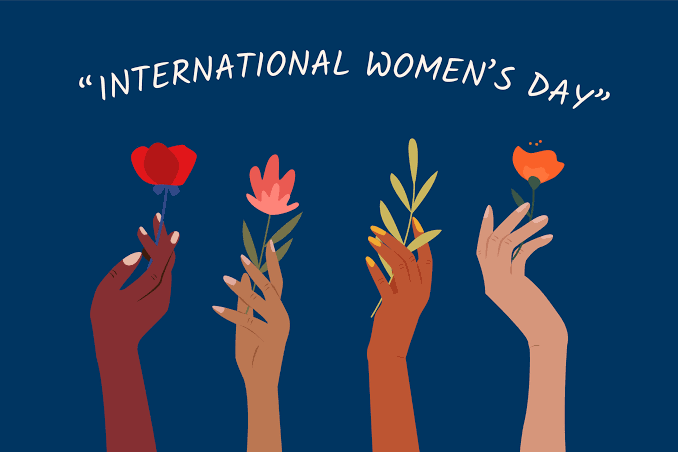
    Today is International Women’s Day—a day meant to celebrate the strength, resilience, and achievements of women. But I find myself reflecting on the ways women have also been the architects of some of my deepest wounds.

    In a world where women already face scrutiny, dismissal, and injustice, I never expected that my greatest injuries would come from the very people who should have stood beside me. Women who pried into my life under the guise of accountability. Women who whispered behind closed doors, who disguised their judgment as concern, who demanded answers they were never entitled to. Women who, instead of lifting me up, placed weights upon my shoulders that I was never meant to carry.

    Living as a woman in a place that already struggled to see our worth was hard enough. My gender was a constant reason to be dismissed. My age, my race, my marital status, my presence—reasons to be overlooked, questioned, and mocked on a daily basis. And yet, instead of refuge, I found further injury in the company of women. The ones who should have understood. The ones who should have known better.

    And now, when I speak of the pain that was inflicted, I am told that I should be more uplifting. That my words should inspire, not burden. That I should move on, heal, be grateful for the suffering that has somehow made me stronger. As though I chose this suffering. As though these wounds were self-inflicted, instead of the result of hands that tore down rather than built up.

    Even my deepest heartbreak—the loss of the one who taught me what it meant to love—was in part shaped by these wounds. By the endless scrutiny, the whispered accusations, the quiet destruction wrought by those who saw themselves as righteous. And yet, when I grieve, I am told that I should be silent. That faith should mend what was broken, that trust in God should be enough to erase the scars.

    But faith is not the absence of suffering, and healing is not the same as forgetting. Christ carried His cross, not because He deserved to suffer, but because He chose to bear the weight of what others placed upon Him. And while I am no savior, I, too, find myself bearing burdens I did not ask for, carrying wounds that were never mine to inflict.

    So on this International Women’s Day, I do not simply call for celebration. I call for reckoning. For a recognition of the ways we, as women, have failed one another. For a shift in how we see each other—not as competition, not as projects to fix or control, not as threats—but as fellow sojourners in a world that is already too heavy with injustice.

    May we, instead of wounding, learn to heal. May we, instead of judging, learn to understand. And may we never again be the ones placing the cross on another woman’s back.

  • When Prayers Feel Like Echoes

    I have been prayed over more times than I can count. Hands resting on my shoulders, voices lifting like incense, curling into the air, into the restless hours of the night. I was sent to sleep with ardent prayers for my settling, for peace to take root in my spirit. But I did not settle. I unraveled. I shattered.

    I prayed in desperation, in the rawness of exhaustion and sorrow. I prayed that what I clung to by my fingernails would not slip, would not crash to the ground and shatter beyond repair. I begged for time to rewind, for the future I had built in my heart to remain intact. But time is merciless, and prayers do not always hold back the tide.

    And then, when I realized I was asking too much, I stopped praying for rescue and only pleaded for the pain to end. For sleep to come. For my gut not to twist each morning as I woke up to the nightmare I was living. I prayed for numbness, for silence, for a reprieve from the endless ache.

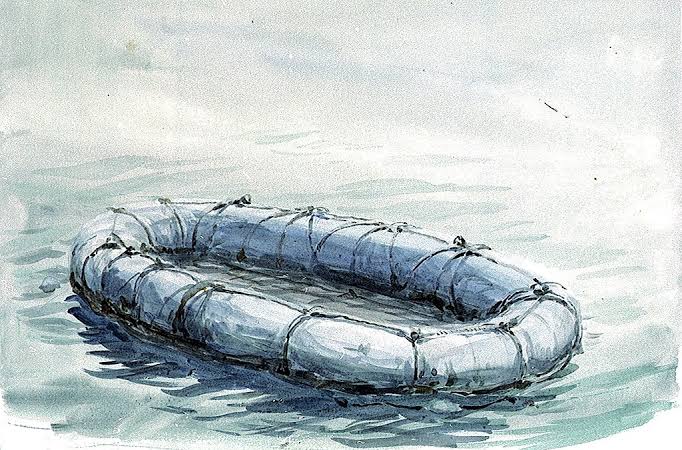
    God sent me lifeboats and I turned each one away. They were not what I wanted. I did not want friendship; I wanted love. I did not want an offer of a job; I wanted my old life. I did not want questions from nosey family members; I wanted answers for why this was happening to me. I did not want a diagnosis; I wanted healing. I did not want consolations; I wanted the prize I had spent years nurturing for a future I had already seen. I did not want their prayers; I wanted his whispers pouring over me as I fell asleep. I wanted what had been mine, whole and unbroken.

    In the bleakest nights, I called home. My family’s voices, steady and sure, became my lifeline. Across the miles, they prayed for me—words spilling over crackling phone lines, reaching into the ache I could not name. They believed when I could not. They called on hope when I had none. And yet, even after I returned home, I prayed for things to be made right. I prayed for restoration, for justice, for a reversal of what had been taken from me.

    Some prayers do not get answered. At least, not in the way we expect. At least, not yet.

    My faith was shaken. My despair was deep. A curse had been spoken over my life, and I felt its weight pressing down, unseen but inescapable. I carried it, even as I whispered prayers into the quiet, wondering if they rose beyond the ceiling, if they faded before they reached the heavens. I searched for signs, for something that might tell me I had not been forgotten.

    And yet—somewhere in the long unraveling of time—light seeped in. A different path emerged, soft-footed, unexpected. It was not the answer I had begged for, not the restoration I had envisioned. But it was something. A quiet shift, a tender mercy. Maybe prayers are answered in ways we do not recognize at first. Maybe hope, slow as the tide, is still coming for me.

    And maybe, just maybe, the lifeboat I had once turned away has circled back—no longer the vessel I fought for, but one I can finally step into, weary, but willing, at last.

  • Phases of Us

    The moon would light my way to you,
    a silver hush, a pearly hue.
    Through shadowed paths and whispering trees,
    we met beneath the midnight breeze.

    The world lay still, the echoes died,
    as time unspooled and opened wide.
    No eyes but hers to see us there,
    soft glow upon your face laid bare.

    She waxed and waned, and so did I,
    bright and bold, then shrinking shy.
    A crescent thin, a silent plea,
    or full and fierce—untamed, set free.

    Yet always, when the dark grew deep,
    when others fell to dream-lost sleep,
    I’d find you where the fireflies gleamed,
    as if the night was how we dreamed.

    Now years have passed, her light remains,
    soft fingers tracing old refrains.
    She pulls the tides, she pulls my mind,
    to moments only we could find.

    For moons will change, but never fade,
    and love, once lit, still holds its shade.

  • The Frustration of Injustice

    There is a weight that comes with working in a place where justice bends to power, where laws exist but do not always protect, where officials wield decisions like weapons, deciding—on a whim—who stays and who goes. A place where the price of efficiency is not diligence, but money slipped into the right hands.

    Papua New Guinea is breathtaking in its beauty, but beneath its sweeping mountains and winding rivers, beneath the warmth of its people, lies a system tangled in red tape, where progress is often at the mercy of corruption. You learn quickly that rules are not fixed but fluid, bending to influence, shifting with unseen negotiations. A visa may be granted, or it may not. A permit may be approved, or it may disappear into the abyss of a cluttered desk, unless you know the right person to call, the right hands to grease.

    The frustration gnaws at you. For the family waiting for medical supplies that are held up at customs until someone is “properly thanked.” For the woman seeking justice for the violence she endured, only to be told that her case will move forward when she can pay the officer’s “fuel allowance.” For the child whose education is determined not by merit, but by the depth of their family’s pockets.

    And yet, somehow, people persist.

    They find the cracks in the system, the rare officials who are honest, the loopholes that make things work. They become fluent in the language of negotiation, learning who to ask, when to push, when to wait. They build relationships, they strategize, they endure. Not because they accept the corruption, but because walking away would mean leaving people behind.

    It is a delicate dance—this battle against injustice. Too much resistance, and the doors close. Too little, and nothing changes. So they walk the line, pushing where they can, swallowing their anger when they must, keeping their eyes fixed on what matters most: the people they came to help.

    There are victories, even in the midst of the struggle. The medical supplies that finally arrive, the child who gets their education, the woman who, against all odds, finds justice. And those moments make the fight worth it.

    Hope in PNG is not naïve. It is not the kind that ignores the weight of corruption or pretends the system will change overnight. It is the hope that comes with knowing that even when justice is slow, even when fairness is bought rather than granted, there are still those who refuse to walk away. They stay. They fight. They make it work. Because if they don’t, who will?

  • The Weight of Community

    Missionary work is often spoken of in terms of sacrifice—leaving behind the familiar, stepping into the unknown, giving of oneself for a higher purpose. What is less discussed is the complexity of the community itself—the way relationships are not only formed but also scrutinized, the way expectations press in from all sides, and the way personal lives can become the subject of unwanted discussion.

    I arrived open-hearted, eager to contribute, ready to learn. But I quickly discovered that life among missionaries was not just about the work; it was about navigating an intricate web of expectations, where personal boundaries were often blurred. Questions came freely, sometimes under the guise of concern, other times with a quiet insistence that made it clear they were not really questions at all. Where was I headed? What were my long-term plans? Was I committed to staying? These were not simple curiosities—they carried weight, an unspoken pressure to declare intentions before I had even found my footing.

    My relationships, too, became a subject of discussion beyond my control. Conversations I had not yet had for myself were already being speculated on in forums where I was unprepared to address them. Older missionaries—some with good intentions, others with a sense of authority—pried into matters I would have preferred to keep private. They dissected my choices, offered unsolicited advice, and sometimes spoke as though they had a stake in decisions that belonged to me alone.

    I wanted to be helpful, to contribute, to prove that I belonged. But my efforts were not always met with encouragement. At times, my willingness to step in and assist was seen not as a strength but as something to be tempered—as if I needed to be reminded of my place. I learned that offering help did not always mean being welcomed. Sometimes, it was taken as a challenge, as if my presence unsettled the unspoken order of things.

    And yet, even in the midst of these challenges, there were those who brought light. Kind souls—often from outside the circles I was part of—offered gentle conversations, safe places where I could be honest about my struggles without fear of judgment. They checked in, brought quiet understanding, and reminded me that not everyone operated by the same unspoken rules. When the weight of expectations became too much, they provided sanctuary. They were the ones who saw me not as a project to be managed, but as a person to be cared for.

    Looking back, I do not fault those who asked too much of me, who pried where they shouldn’t have, who unknowingly added to my burdens. They were part of a system that had shaped them, just as it had begun to shape me. But I see now that support is not just about expectation—it is about presence. It is about listening without demanding answers, offering guidance without insisting on control, and creating space for growth rather than forcing a path.

    And for those who did that—for those who simply sat with me, walked alongside me, and reminded me that I was not alone—I will always be grateful.

  • The Quiet Power of Kindness


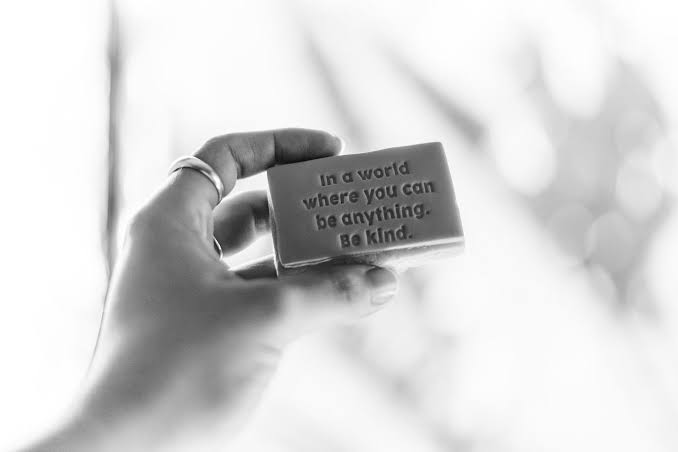
    It costs nothing, yet its impact is immeasurable. It leaves no visible trace, yet it lingers in the heart long after it is given. Kindness is not grand or showy; it does not demand attention. It is the quiet force that holds the world together, stitching unseen wounds and softening the sharp edges of life.

    We often think of kindness as a response to visible need—a hand extended to someone who has stumbled, a comforting word to someone in obvious distress. But the truth is, most struggles are silent. The colleague who snaps in frustration may be carrying the weight of a sleepless night. The stranger who bumps into you without apology might be lost in grief. The friend who cancels plans yet again may be battling unseen exhaustion. Pain does not always announce itself. And so, kindness must not be conditional upon it.

    To be kind is to recognize that everyone carries burdens we cannot see. It is to extend gentleness, not because it has been earned, but because it is needed. A simple smile, a word of encouragement, a moment of patience—these are the smallest of gestures, yet they have the power to shift the course of a day, or even a life.

    We live in a world that often rewards efficiency over empathy, where busyness is mistaken for importance and where kindness can feel like an afterthought. But what if we placed it at the forefront? What if we made it a habit, not just an impulse? What if kindness became our first instinct, rather than something we offer when it is convenient?

    We may never know the full impact of the kindness we extend. A kind word spoken today might be the thing someone holds onto for years. A moment of grace might be the reason someone believes in goodness again.

    The beauty of kindness is that it does not require us to understand another’s struggle fully; it only asks that we respond with care.

    So let us be kind, not only when it is easy, not only when the need is obvious, but always. Because if we are not kind to each other, who will be?