Tag: Healing

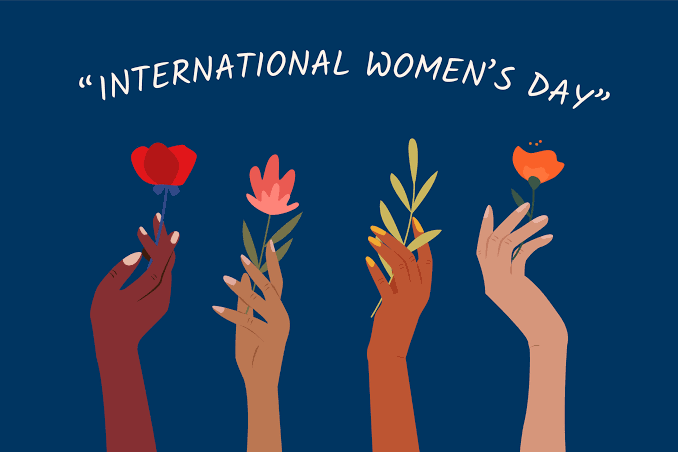
  • International Women’s Day

    Today is International Women’s Day—a day meant to celebrate the strength, resilience, and achievements of women. But I find myself reflecting on the ways women have also been the architects of some of my deepest wounds.

    In a world where women already face scrutiny, dismissal, and injustice, I never expected that my greatest injuries would come from the very people who should have stood beside me. Women who pried into my life under the guise of accountability. Women who whispered behind closed doors, who disguised their judgment as concern, who demanded answers they were never entitled to. Women who, instead of lifting me up, placed weights upon my shoulders that I was never meant to carry.

    Living as a woman in a place that already struggled to see our worth was hard enough. My gender was a constant reason to be dismissed. My age, my race, my marital status, my presence—reasons to be overlooked, questioned, and mocked on a daily basis. And yet, instead of refuge, I found further injury in the company of women. The ones who should have understood. The ones who should have known better.

    And now, when I speak of the pain that was inflicted, I am told that I should be more uplifting. That my words should inspire, not burden. That I should move on, heal, be grateful for the suffering that has somehow made me stronger. As though I chose this suffering. As though these wounds were self-inflicted, instead of the result of hands that tore down rather than built up.

    Even my deepest heartbreak—the loss of the one who taught me what it meant to love—was in part shaped by these wounds. By the endless scrutiny, the whispered accusations, the quiet destruction wrought by those who saw themselves as righteous. And yet, when I grieve, I am told that I should be silent. That faith should mend what was broken, that trust in God should be enough to erase the scars.

    But faith is not the absence of suffering, and healing is not the same as forgetting. Christ carried His cross, not because He deserved to suffer, but because He chose to bear the weight of what others placed upon Him. And while I am no savior, I, too, find myself bearing burdens I did not ask for, carrying wounds that were never mine to inflict.

    So on this International Women’s Day, I do not simply call for celebration. I call for reckoning. For a recognition of the ways we, as women, have failed one another. For a shift in how we see each other—not as competition, not as projects to fix or control, not as threats—but as fellow sojourners in a world that is already too heavy with injustice.

    May we, instead of wounding, learn to heal. May we, instead of judging, learn to understand. And may we never again be the ones placing the cross on another woman’s back.
  • Becoming Strangers

    We spoke in whispers, soft and low,
    In laughter’s light, in embers’ glow.
    In quiet prayers and silver streams,
    We wove our hearts, we built our dreams.

    You knew my fears, my weary sighs,
    The light that danced behind my eyes.
    You held my hope, you knew my name,
    Before the silence, before it changed.

    I did not choose to walk away,
    But winds arose, I could not stay.
    The tether snapped, the distance grew,
    And love turned ghostly, pale and blue.

    I knocked, I called, I sent my plea,
    But doors don’t open without a key.
    And echoes fade behind cold walls,
    No matter how a heartbeat calls.

    Yet if I spoke, it would be low,
    A whisper soft, a sorrowed glow.
    If I could see you, just once more,
    I’d smile like I had done before.

    Not for the ache, not for the pain,
    But for the love that still remains.

  • When Prayers Feel Like Echoes

    I have been prayed over more times than I can count. Hands resting on my shoulders, voices lifting like incense, curling into the air, into the restless hours of the night. I was sent to sleep with ardent prayers for my settling, for peace to take root in my spirit. But I did not settle. I unraveled. I shattered.

    I prayed in desperation, in the rawness of exhaustion and sorrow. I prayed that what I clung to by my fingernails would not slip, would not crash to the ground and shatter beyond repair. I begged for time to rewind, for the future I had built in my heart to remain intact. But time is merciless, and prayers do not always hold back the tide.

    And then, when I realized I was asking too much, I stopped praying for rescue and only pleaded for the pain to end. For sleep to come. For my gut not to twist each morning as I woke up to the nightmare I was living. I prayed for numbness, for silence, for a reprieve from the endless ache.

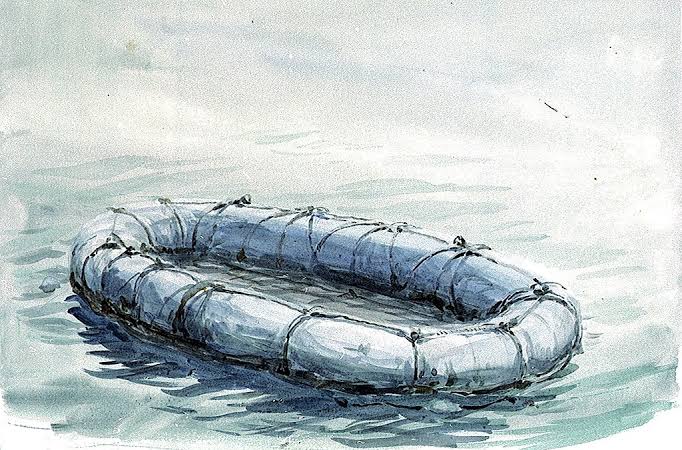
    God sent me lifeboats and I turned each one away. They were not what I wanted. I did not want friendship; I wanted love. I did not want an offer of a job; I wanted my old life. I did not want questions from nosey family members; I wanted answers for why this was happening to me. I did not want a diagnosis; I wanted healing. I did not want consolations; I wanted the prize I had spent years nurturing for a future I had already seen. I did not want their prayers; I wanted his whispers pouring over me as I fell asleep. I wanted what had been mine, whole and unbroken.

    In the bleakest nights, I called home. My family’s voices, steady and sure, became my lifeline. Across the miles, they prayed for me—words spilling over crackling phone lines, reaching into the ache I could not name. They believed when I could not. They called on hope when I had none. And yet, even after I returned home, I prayed for things to be made right. I prayed for restoration, for justice, for a reversal of what had been taken from me.

    Some prayers do not get answered. At least, not in the way we expect. At least, not yet.

    My faith was shaken. My despair was deep. A curse had been spoken over my life, and I felt its weight pressing down, unseen but inescapable. I carried it, even as I whispered prayers into the quiet, wondering if they rose beyond the ceiling, if they faded before they reached the heavens. I searched for signs, for something that might tell me I had not been forgotten.

    And yet—somewhere in the long unraveling of time—light seeped in. A different path emerged, soft-footed, unexpected. It was not the answer I had begged for, not the restoration I had envisioned. But it was something. A quiet shift, a tender mercy. Maybe prayers are answered in ways we do not recognize at first. Maybe hope, slow as the tide, is still coming for me.

    And maybe, just maybe, the lifeboat I had once turned away has circled back—no longer the vessel I fought for, but one I can finally step into, weary, but willing, at last.

  • Phases of Us

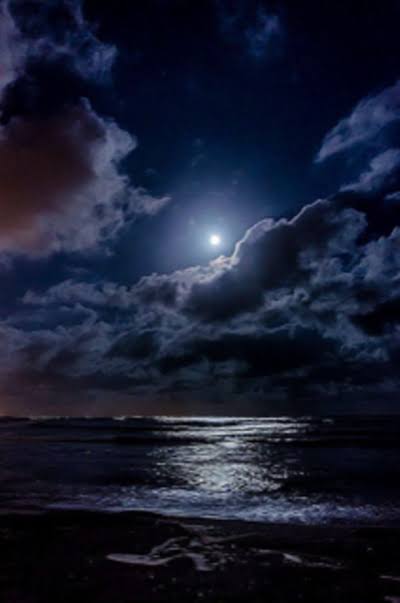
    The moon would light my way to you,
    a silver hush, a pearly hue.
    Through shadowed paths and whispering trees,
    we met beneath the midnight breeze.

    The world lay still, the echoes died,
    as time unspooled and opened wide.
    No eyes but hers to see us there,
    soft glow upon your face laid bare.

    She waxed and waned, and so did I,
    bright and bold, then shrinking shy.
    A crescent thin, a silent plea,
    or full and fierce—untamed, set free.

    Yet always, when the dark grew deep,
    when others fell to dream-lost sleep,
    I’d find you where the fireflies gleamed,
    as if the night was how we dreamed.

    Now years have passed, her light remains,
    soft fingers tracing old refrains.
    She pulls the tides, she pulls my mind,
    to moments only we could find.

    For moons will change, but never fade,
    and love, once lit, still holds its shade.

  • The Frustration of Injustice

    There is a weight that comes with working in a place where justice bends to power, where laws exist but do not always protect, where officials wield decisions like weapons, deciding—on a whim—who stays and who goes. A place where the price of efficiency is not diligence, but money slipped into the right hands.

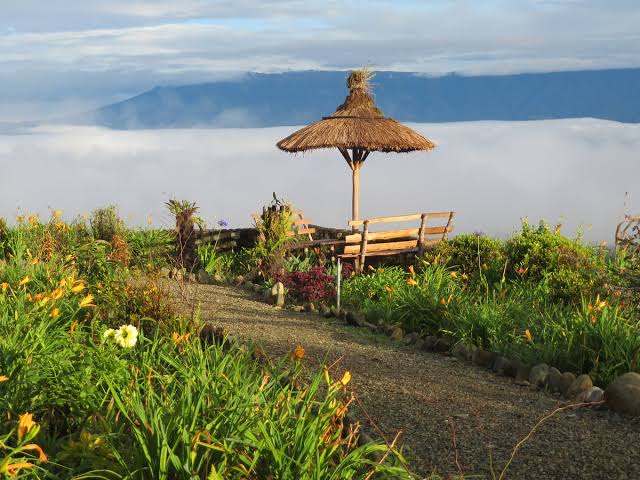
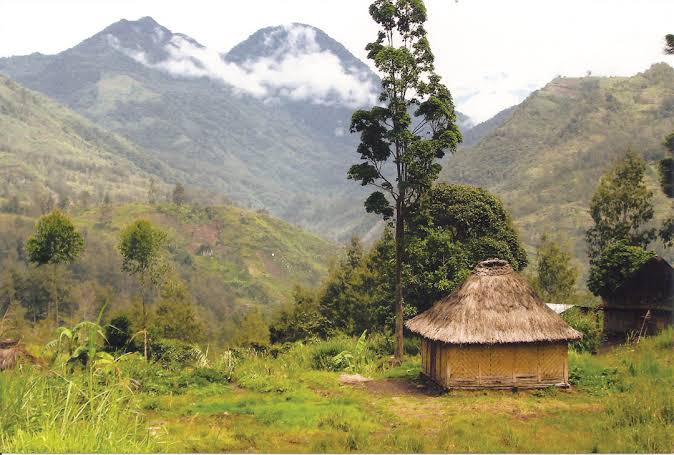
    Papua New Guinea is breathtaking in its beauty, but beneath its sweeping mountains and winding rivers, beneath the warmth of its people, lies a system tangled in red tape, where progress is often at the mercy of corruption. You learn quickly that rules are not fixed but fluid, bending to influence, shifting with unseen negotiations. A visa may be granted, or it may not. A permit may be approved, or it may disappear into the abyss of a cluttered desk, unless you know the right person to call, the right hands to grease.

    The frustration gnaws at you. For the family waiting for medical supplies that are held up at customs until someone is “properly thanked.” For the woman seeking justice for the violence she endured, only to be told that her case will move forward when she can pay the officer’s “fuel allowance.” For the child whose education is determined not by merit, but by the depth of their family’s pockets.

    And yet, somehow, people persist.

    They find the cracks in the system, the rare officials who are honest, the loopholes that make things work. They become fluent in the language of negotiation, learning who to ask, when to push, when to wait. They build relationships, they strategize, they endure. Not because they accept the corruption, but because walking away would mean leaving people behind.

    It is a delicate dance—this battle against injustice. Too much resistance, and the doors close. Too little, and nothing changes. So they walk the line, pushing where they can, swallowing their anger when they must, keeping their eyes fixed on what matters most: the people they came to help.

    There are victories, even in the midst of the struggle. The medical supplies that finally arrive, the child who gets their education, the woman who, against all odds, finds justice. And those moments make the fight worth it.

    Hope in PNG is not naïve. It is not the kind that ignores the weight of corruption or pretends the system will change overnight. It is the hope that comes with knowing that even when justice is slow, even when fairness is bought rather than granted, there are still those who refuse to walk away. They stay. They fight. They make it work. Because if they don’t, who will?

  • The Weight of Community

    Missionary work is often spoken of in terms of sacrifice—leaving behind the familiar, stepping into the unknown, giving of oneself for a higher purpose. What is less discussed is the complexity of the community itself—the way relationships are not only formed but also scrutinized, the way expectations press in from all sides, and the way personal lives can become the subject of unwanted discussion.

    I arrived open-hearted, eager to contribute, ready to learn. But I quickly discovered that life among missionaries was not just about the work; it was about navigating an intricate web of expectations, where personal boundaries were often blurred. Questions came freely, sometimes under the guise of concern, other times with a quiet insistence that made it clear they were not really questions at all. Where was I headed? What were my long-term plans? Was I committed to staying? These were not simple curiosities—they carried weight, an unspoken pressure to declare intentions before I had even found my footing.

    My relationships, too, became a subject of discussion beyond my control. Conversations I had not yet had for myself were already being speculated on in forums where I was unprepared to address them. Older missionaries—some with good intentions, others with a sense of authority—pried into matters I would have preferred to keep private. They dissected my choices, offered unsolicited advice, and sometimes spoke as though they had a stake in decisions that belonged to me alone.

    I wanted to be helpful, to contribute, to prove that I belonged. But my efforts were not always met with encouragement. At times, my willingness to step in and assist was seen not as a strength but as something to be tempered—as if I needed to be reminded of my place. I learned that offering help did not always mean being welcomed. Sometimes, it was taken as a challenge, as if my presence unsettled the unspoken order of things.

    And yet, even in the midst of these challenges, there were those who brought light. Kind souls—often from outside the circles I was part of—offered gentle conversations, safe places where I could be honest about my struggles without fear of judgment. They checked in, brought quiet understanding, and reminded me that not everyone operated by the same unspoken rules. When the weight of expectations became too much, they provided sanctuary. They were the ones who saw me not as a project to be managed, but as a person to be cared for.

    Looking back, I do not fault those who asked too much of me, who pried where they shouldn’t have, who unknowingly added to my burdens. They were part of a system that had shaped them, just as it had begun to shape me. But I see now that support is not just about expectation—it is about presence. It is about listening without demanding answers, offering guidance without insisting on control, and creating space for growth rather than forcing a path.

    And for those who did that—for those who simply sat with me, walked alongside me, and reminded me that I was not alone—I will always be grateful.

  • The Weight of Unanswered Questions

    There is a peculiar kind of grief that comes not from what is lost, but from what is never known. The questions that hang in the air, unanswered, unresolved. The ones we carry with us long after the moment has passed, pressing against our ribs, whispering in the quiet hours of the night.

    What if? Why? Did I ever mean as much to you as you meant to me? Were you afraid, or were you indifferent? Was it ever real? Was I foolish for believing?

    Some questions remain because we are too afraid to ask them. Others because the answers would wound us more than the silence. And then there are those we do ask—over and over, in every way we know how—only to be met with quiet, with absence, with the unbearable weight of nothing.

    I have spent years carrying questions like stones in my pockets. Waiting for a response that never came, a certainty that never arrived. I have stood on the edge of my own sanity, trying to make sense of the silence, trying to fill in the gaps with logic, with hope, with desperate justifications.

    I see now that I was not just waiting for answers—I was waiting for closure, for understanding, for something that would make the pain make sense. But the truth is, some questions will never be answered, and some wounds will never be wrapped in neat explanations.

    It is in our nature to seek resolution. We want to understand. We want to stitch the past together in a way that lets us move forward without looking back. But life is not so kind. Some stories are left unfinished, some doors left ajar, some words left unsaid. And we must learn to live with that.

    And yet, despite the weight of all I do not know, I am learning this: I do not need answers to find peace. I do not need certainty to heal. Perhaps, in time, I will learn to set down these stones, one by one, until my hands are free to hold something new.

    C.S. Lewis once wrote, “We can never know what might have been, but what is to come is another matter.”

    So I will turn my gaze forward. Not because the past does not matter, not because the questions do not ache, but because life is still unfolding. And perhaps, just perhaps, the answers I have been searching for will come in a different form—one I never expected.

  • The Realities of Mission Life

    I didn’t grow up dreaming of a life in missions. My journey into the field wasn’t the culmination of a lifelong calling but rather an unexpected turn. For years, I worked in the background, immersed in the stories of others. Eventually, I was given the opportunity to visit—not to stay, but to see firsthand what our missionaries were doing.

    I traveled to multiple locations, meeting people from all walks of life: those serving tirelessly on the ground and those they served. But what began as a short visit to observe grew into something much more profound. It became a season that stretched me in ways I couldn’t have anticipated—a season of brokenness and beauty.

    The moment I stepped off the plane, Papua New Guinea introduced itself with force. The air carried the acrid bite of burning rubbish, mingling with the sticky weight of tropical heat. The unforgiving roads jolted my body, while rocks thudded against walls and vehicles, startling me into hyper-awareness. Bugs and vermin were everywhere, turning even my pillow into contested ground.

    The township itself felt like an endless assault on my senses: the hum of generators during power cuts, the dust that clung to my skin and clothes, the stares that followed me through every supermarket aisle. I had never felt so seen, yet so invisible, all at once.

    But as disorienting as the physical environment was, it wasn’t the hardest part of the journey.

    What I hadn’t expected was how difficult life within the missionary community itself could be. Living and working in such close quarters blurred the lines between public and private life. There were constant expectations—to bring a meal for the shared table after a long day, to attend every gathering, to fit seamlessly into a community where everyone seemed to know their place.

    I struggled to find mine.

    There were whispered judgments, or at least the suspicion of them, and I withdrew further with each passing day. The isolation wasn’t just cultural—it was relational. I felt like an outsider among my neighbours and colleagues, the very people I was supposed to lean on.

    Yet even in the hardest moments, there were glimpses of grace.

    A friend would invite me for a quiet walk, away from the noise and dust. Another would sit with me in stillness, offering their presence rather than advice. These small acts of kindness became lifelines, softening the edges of an experience that often felt unbearably sharp.

    And then, there was love.

    Amid the chaos, I had someone who saw me—not as the missionary, the outsider, or the white woman out of her depth, but as me. It was unexpected and unplanned, a magical soul connection in the gutter of the world. In a place that often felt hostile and alien, I experienced the warmth of being known, the tenderness of being loved, and the hope of something beautiful growing in the most unlikely of places.

    That love didn’t erase the challenges, but it offered a light that cut through the shadows. It reminded me that even in the darkest, most isolating seasons, there are moments of beauty worth holding on to.

    Mission work is often presented in stories of transformation and triumph, but the truth is far more complex. It’s a tangle of beauty and brokenness, connection and isolation, courage and weariness.

    For me, it was all of these things. It was the stench of burning rubbish and the sweetness of love. It was the ache of loneliness and the joy of finding someone who truly saw me. It was a season of breaking and rebuilding, of holding both the unbearable and the extraordinary.

    To those supporting missionaries: don’t stop at the surface. Pray for more than their work. Ask about their hearts, their struggles, their moments of joy and despair. A simple message or a word of encouragement can mean more than you know.

    And to those in the field: you are not alone. Even in the darkest, most isolating moments, there is grace to be found. Sometimes it’s in a kind word, sometimes in a shared laugh, and sometimes it’s in the profound connection of being truly seen. And sometimes, you can be that light for someone else.

  • Resilience: The long journey home

    Resilience is not just survival. It is not just enduring. It is not just standing upright beneath a weight that should have crushed me.

    For years, I thought resilience meant suppressing my pain, swallowing my shame, and moving forward without flinching. I thought it meant being strong enough to endure rejection, failure, and loss without breaking. But I have learned that true resilience is not about how much I can bear—it is about how much I can release.

    I have carried so much shame.

    The shame of rejection. Of not being chosen. Of waiting for someone to come good, only to be met with silence. The shame of being a puppet in someone else’s game, of being used, discarded, and dismissed when I sought answers, when I demanded reparations.

    The shame of being too introverted for the role I was expected to play. Of feeling alien in an environment that assaulted my senses. The shame of longing for beauty in a world that expected me to accept filth. The shame of exhaustion, of needing rest when I was told to push through. The shame of being let down by friends, of realizing they would not—could not—fight for me the way I had fought for them.

    And worst of all, the shame of feeling like even God had turned His back on me.

    I came home broken—physically, emotionally, spiritually. And the voices of the faithful told me it was my own fault. “Oh ye of little faith,” they said, as though faith alone should have been enough to keep me from collapsing under the weight of it all.

    And so I carried even more shame.

    But resilience is about unlearning that shame. It is about seeing the truth: that I was not weak, only human. That I was not unworthy, only wounded. That I did not fail—I survived.

    Trauma does not just leave bruises on the heart; it seeps into the mind, into the very way I see the world. It left me paralyzed, unable to make plans, unable to picture a future. It taught me that hope was dangerous, that expectations only led to disappointment. And in the moments I needed connection the most, it kept me locked in silence.

    I see it now.

    I see how I lashed out in my own pain when silence was all I received in return. I see how I longed for certainty, for clarity, for direction, while someone else was frozen in fear, unable to answer the questions I so desperately needed resolved. I see how trauma response was meeting trauma response, and we only ever hurt each other more.

    And now I lay it down.

    The shame. The guilt. The need for answers. The desire for reparations that will never come.

    I do not need their apology to heal. I do not need their recognition to be whole. I do not need permission to exist fully, freely, without shame.

    Resilience is about creating a home in myself where I am not judged, abandoned, or rejected. It is about carrying that home with me so I am no longer at anyone else’s mercy. And in that home, I have found that God was never the one who turned away from me.

    I had mistaken the cruelty of people for the absence of God. I had let the failures of churches convince me that He had failed me too. But He was always there—in the quiet, in the stillness, in the moments I thought I was alone.

    God is not a church. He is not a system. He is not an institution that protects its own at the expense of the wounded. He is not the voices that dismissed me. He is not the ones who looked the other way.

    He is the quiet whisper in my heart. He is the one who saw every injustice, every betrayal, every tear. And He is the one who is still calling me—not to penance, not to suffering, not to proving my worth, but to freedom.

    I am not what happened to me.

    I am not the rejection. I am not the silence. I am not the failures of others to see my worth.

    I am here.

    I am healing.

    I am whole.

    And I was always, always loved.

  • The Silence that Breaks Us

    Trauma does not always look like open wounds and trembling hands. Sometimes, it looks like silence. Like paralysis. Like the slow erosion of a future you can no longer picture, because each time you reached for certainty, the ground crumbled beneath you.

    It took me years to understand this. Years to realize that what I saw as rejection—what I felt as unbearable, heart-wrenching neglect—was something else entirely. He wasn’t ignoring me. He wasn’t being careless with my heart. He was afraid.

    At the time, I did not know the language of trauma. I did not know how it steals your voice, how it traps you in the present with no roadmap for what comes next. I did not know that some people, when faced with the unbearable weight of decision, simply freeze. I only knew what it felt like to pour out my soul in ink and receive nothing in return. To open my heart in trembling conversations, only to meet silence on the other side.

    Silence became the slow undoing of me. Not because I needed constant reassurance, but because I needed something—anything—to hold on to. A plan, a promise, a direction. But trauma makes the future feel like a distant and unreachable thing, and now I see how that weight crushed him, too.

    I wish I had understood then. I wish I had not seen his fear as something done to me, but rather as something he was drowning in. I wish I had not let my own pain turn to bitterness, had not lashed out in my agony, desperate for him to just say something, anything at all. But I was young, and I was hurting, and I did not yet know what I know now—that sometimes, the people we love are not holding back because they do not care, but because they do not know how to move forward.

    It reminds me of Shakespeare’s words: “Give sorrow words; the grief that does not speak whispers the o’erfraught heart and bids it break.” And that was the tragedy, wasn’t it? Neither of us could find the right words. My grief was too loud, his was too silent, and in the space between, something precious unraveled.

    In the end, it was the silence that broke me. Because distance does not allow for the unspoken to be read in a glance, for a hand on the shoulder to bridge the void where words fail. And so, I sat on one side of the ocean, waiting for answers, while he sat on the other, frozen in place, unable to give them.

    I have learned so much since then. I have learned how trauma takes hostages. How it steals not only the past but the future, making even love feel like something too uncertain to reach for. And most of all, I have learned that I, too, have been guilty of adding to another’s pain when I did not understand its depths.

    I cannot rewrite the past. I cannot go back and tell my younger self to hold her anger, to see beyond her own wounds, to recognize the shape of his fear. But I can hold space for the knowing now. I can offer the grace I once did not. And perhaps, that is its own kind of redemption.