Tag: Healing

  • Uneven Curiosity

    One of the quiet conundrums I carried in my time as a missionary in PNG was this: why is it that so much is expected of us, in terms of cultural sensitivity and adaptation, while almost nothing is asked in return?

    I don’t mean that harshly. It’s just… something I noticed. Again and again.

    We were trained to bend, to soften, to listen carefully, to hold our tongues when things felt off-kilter. We were taught new languages, both spoken and not. We were taught to treat every cultural difference with reverence, to assume goodwill, to hold space for what we didn’t yet understand.

    But I rarely, if ever, saw that same posture mirrored back toward us.

    There seemed to be no collective curiosity about our culture—no sense that our ways might also be different and worthy of understanding. It often felt like the flow of effort and empathy was a one-way stream, and that to speak up about the toll this took would somehow make me unkind.

    So instead, we shut down.

    Not from superiority. Not from spite. From fatigue. From the effort of constantly treading gently, constantly translating ourselves, constantly shrinking in the name of peace and conformity.

    I saw it in others too. In the shoulders drawn tight. In the careful pauses before someone responded. In the practiced neutral tone. We weren’t being false; we were just being careful. Careful not to offend. Careful not to be misunderstood. Careful to fit in—if not in heart, then at least in silence.

    And yet, when we were surprised or jarred by something, we’d often whisper to each other, “It’s okay. Every culture is different. This wasn’t personal.”

    We made space. We stretched wide.

    But there was another layer to my silence, one I didn’t always know how to name. I was not just an expat trying to fit in—I was a young, single, white woman in a place where that trifecta was impossibly conspicuous.

    I felt watched. Not always unkindly, but constantly. And sometimes, dangerously.

    There were many days I simply couldn’t go out. Not without risk. Not without dread curling in my belly. There were roads I couldn’t drive, markets I couldn’t enter, places I couldn’t be alone. I learned to scan every street, every pair of eyes. I learned to disappear in plain sight. To hide.

    It was too dangerous to be out.

    Too dangerous to be me.

    The only one of my kind in the wild.

    And yet, I was still expected to be warm, open, adaptable. To engage, to explain myself, to never show discomfort. But so often, the cost of simply existing in that place was already more than I could say aloud.

    So I became smaller. Quieter. I folded myself inwards. I dressed in plain clothes and gentle tones. I deflected attention. I kept my stories close to my chest. I let others speak first. I practiced invisibility.

    And still—I loved. I served. I laughed with local women in smoky huts. I sang in church aisles. I listened to stories that broke my heart and mended it again. But I often felt like a ghost version of myself—present, but not fully seen. Tolerated – yes, respected – perhaps, but definitely not understood.

    I don’t blame individuals. Many were kind, and some were curious in quiet, tender ways. But as a whole, I think PNG as a nation—a young, mono-cultural one still learning to hold difference without suspicion—has not yet had to ask these questions. Has not yet been called to look outward with the same empathy we were trained to bring inward.

    And I wonder if, perhaps, that mutual curiosity could be the beginning of something sacred.

    Because I truly believe there’s untapped potential here—relationally, spiritually, economically—for growth that could come through understanding. If people in PNG took the time to truly see and know their international friends, especially those who quietly fold themselves to fit, I think there’d be more cohesion. More grace. More beautiful partnership.

    And maybe—just maybe—fewer women like me, carrying their full selves in silence, waiting for someone to ask, “What is it like for you here?”

  • When the Light Goes Out

    Grief didn’t come gently.
    It didn’t knock.
    It surged, sharp and uninvited, through my chest like a tide at midnight,
    leaving behind a silence I couldn’t unhear.

    My ribs barely held it.
    My lungs forgot how to draw breath.
    There was no space left for light.


    When I left Papua New Guinea, there was salt on my lips —
    not sea salt, but tears that poured out of the hardest goodbye.
    My soulmate stood on that tarmac, unmoving,
    and something sacred split in me
    as the plane peeled away from the green earth.

    I didn’t just leave a place.
    I left him. With my heart.
    The only him.
    The one my prayers had quietly wrapped themselves around.
    The one my future had dared to imagine in full colour.

    And just like that, the palette of life dimmed.

    Orange turned jagged, like betrayal.
    Blue became an ache, a hollow I couldn’t fill.
    Even white — once my breath of peace —
    felt like chalk in my mouth.

    That’s the trouble with feeling deeply:
    when the world breaks, it breaks your senses, too.


    No one saw.

    I smiled at the airport staff.
    Hugged family.
    Sent replies, politely hollow.
    But inside, I was curled small and silent,
    my soul heaving like a bellows with no flame.

    I couldn’t breathe.
    I couldn’t pray.
    I couldn’t remember what hope felt like.


    It was when I saw him from a distance that the ache turned into something else —
    something heavier.

    There he was, living — helping, pouring, giving.
    Still shining. Still good.
    And there I was, undone.
    A well with no bottom.
    A song without sound.

    He moved through the world like morning light,
    graceful and bright,
    while I became the shadow trailing behind —
    unnoticed, unneeded.

    And the thing no one ever tells you about grief
    is that it doesn’t just steal joy.
    It warps time.
    It lingers in slow motion,
    dragging your feet through days that used to dance.


    I kept reaching into the silence —
    messages, prayers, memory —
    hoping he’d feel something echo back.
    Hoping he’d turn around.

    But the silence stayed.
    And I realized:
    he wasn’t looking for me.
    He wasn’t looking back.

    He was mending others,
    healing what was broken in them.

    And I?

    I was a quiet ache in a crowded room.
    A hollow girl who once held his attention
    and now couldn’t even hold her own reflection without wincing.

    I waited for a sign that I was still seen,
    still worthy of return.
    But all I received
    was the quiet cruelty of being overlooked.


    Not broken enough to matter.
    Not chosen.

    That shame… it’s a whisper that stays.
    It crept behind me like a second skin, murmuring:
    You were not enough. Not for him. Not for anyone.

    And so I fell.
    And kept falling.

    Into a grief that didn’t look dramatic —
    it looked like laundry undone
    and bruises no one asked about.

    It looked like full inboxes
    and empty hearts.
    It looked like functioning.
    Like being fine.

    But I wasn’t fine.


    Some nights I curled into the smallest part of myself
    and tried to remember the curve of his smile —
    the one I’d carried across oceans.

    But even that began to fade.

    The memory of light
    slipping through my fingers,
    like dusk folding into night.

    At my lowest, I sat on the floor,
    back pressed to the wall,
    and wondered what it might feel like to disappear.

    Not dramatically.
    Just… quietly.
    Like a shadow in the wrong light.
    Like breath slipping from a tired body.

    But even that thought —
    it wasn’t death I longed for.
    It was rest.

    It was for someone, anyone, to notice the heaviness I was carrying
    and whisper,
    you don’t have to do this alone.

    Because I couldn’t carry it anymore.
    Not alone.


    I’m not writing from the other side.

    I’m still here.
    Still breathing.

    Some days the light breaks through
    and touches my skin like grace.

    And some days — like today —
    the world feels like glass,
    sharp and fragile,
    and I wonder if anyone hears
    the quiet cry of someone still in love with a ghost.


    But I write anyway.
    For you.

    You who feels invisible.
    You who wonders if your pain is too quiet, too messy, too much.
    You who once felt seen, and now feel hollow.

    You are not alone.

    This darkness is real,
    but it is not forever.

    Even now, I believe that the God who stays in the silence
    is still weaving hope into the shadows.


    One day, someone will see you.
    Truly see you —
    not just your brokenness,
    but your beauty.
    Your wholeness.

    So I breathe.
    I wait.
    I let the small shards of love pierce my palms,
    and I hold them like prayers.

    And for now — for this moment —
    that is enough.


  • Faith in the Fog

    I used to think faith looked like fire —
    bright, bold, unmistakable.
    I thought it would always burn hot in my chest, always feel like certainty, always sound like singing.

    But lately, faith feels more like fog.

    Not gone, just… harder to hold.

    I still believe — but now, belief looks quieter. It looks like choosing to stay
    even when I don’t feel anything. Even when the sky doesn’t answer back.


    I wake up some mornings and whisper,
    “Are You still here?”
    Not because I doubt He exists,
    but because I can’t feel Him
    like I used to.

    There was a time when I would hear Him
    in every song,
    see Him in every sunrise,
    sense Him in every silent moment.

    Now, the silence feels heavier.
    Now, prayer feels like writing letters
    with no return address.

    And honestly, sometimes I feel like I’ve been left on read —
    not just by heaven,
    but by the people I trusted most.


    Rejection came from the places I never expected.
    Friends who turned away
    when I was too much, too broken, too inconvenient.
    A soulmate who wouldn’t walk with me
    through the messy truth of what happened —
    the trauma, the abuse, the parts of my story that aren’t tidy enough for newsletters.

    I was left to carry it alone.
    Ashamed.
    Exposed.
    Unchosen.

    And yet —
    even in all that,
    God never turned His face from me.

    He didn’t flinch.
    He didn’t walk away.
    He never said, “This is too much.”


    That’s the thing about fog.
    You can’t always see who’s standing beside you.

    But that doesn’t mean you’re alone.


    Faith is not the absence of fog.
    It’s the decision to walk through it anyway.

    Not with boldness, always —
    sometimes just with breath.

    Sometimes faith is a single step.
    A whispered prayer.
    A choice to keep the light on,
    even when the room feels empty.


    God isn’t less present in the fog.
    He’s just… less obvious.

    Like breath on glass,
    like wind through branches —
    still there.
    Still moving.
    Still holding.


    There’s a verse I come back to, over and over:

    “For we live by faith, not by sight.” (2 Corinthians 5:7)

    It’s easier to quote than to live.
    But maybe that’s the whole point.

    Maybe real faith is forged here —
    in the grey,
    in the waiting,
    in the long nights where nothing makes sense,
    but we show up anyway.


    I don’t have clarity today.
    But I do have a candle.
    I do have breath.
    I do have the ache that reminds me I’m still alive
    and somehow, still reaching for God
    even when I can’t feel Him reach back.

    And maybe that’s enough for now.


  • The Expiry Date

    The questions start early, and they never really stop.

    “When’s your turn?”
    “Haven’t you found someone yet?”
    “I’m praying for your future husband.”

    As if I had an expiry date stamped across my forehead. As if love were something to be scheduled, arranged, predicted—like a train running neatly on its tracks, pulling into the station on time.

    As if I hadn’t already lost a love I would have died for.

    But no one asks if you’re still grieving. They ask when you’ll be ready to move on. They ask if you’ve tried dating apps, if you’re “putting yourself out there,” if you’ve considered lowering your standards—because apparently, at some point, that’s the logical next step. They ask, and you smile, nod, sip your coffee, and resist the urge to throw it in their lap. Because no one really wants to hear that some love doesn’t fade. That some shadows don’t lift. That some wounds ache even after they’ve healed.

    And in Christian spaces, it is worse.

    Dating isn’t just about finding someone; it’s a witness. A public display of patience and propriety, a carefully choreographed courtship where doors are left open—metaphorically and literally—so the whole community can watch your unfolding love story like a Hallmark movie they personally commissioned.

    Older Christians become self-appointed matchmakers, introducing you to their sons, their nephews, the “wonderful young men” they just know you’d hit it off with. They pray over you—not for healing, not for peace, but for a husband. Because marriage is the ultimate win, and your singlehood is a problem to be solved.

    And so, like a good sport, you try.

    You meet the nephews. You say yes to the coffee dates. You log onto the apps.

    And there are nice enough men. Kind, polite, ticking all the right boxes. But there’s no fire, no knowing. Just awkward small talk and the gnawing sense that you are performing—trying to look accomplished, interesting, credible enough to be seen as a whole person rather than just a placeholder for someone’s future wife.

    You leave those dates feeling more alone than ever.

    Because once, you had something real. Once, love wasn’t a transaction, a series of checklists, a strategic endeavor. Once, it was raw and deep, a connection that didn’t need explaining. But that love is gone, and now you are left to play the game.

    And the rules have always been clear.

    Boy likes girl. Boy asks girl’s father for permission. Father says yes. And before you’ve even caught your breath, you are engaged, because that is the natural progression of things. That is the path. That is the plan.

    And if you once tried to follow it—if you once, as a barely-grown woman, found yourself betrothed because that’s just what you do—you carry that weight with you, too. The knowing. The loss. The quiet exhaustion of a life mapped out before you had time to choose it.

    They say, “God will bring the right person.”

    But what if He already did, and I lost him?

    What if the plan didn’t unfold the way they said it would?

    What if—just maybe—love is not a prize for obedience, but a fragile, fleeting thing that sometimes, no matter how tightly we hold it, still slips through our fingers?

    And what if—after all the questions, all the waiting, all the tired smiles—you simply give in?

    Not to love. Not to some grand divine romance.

    But to the weight of time, to the unspoken deadline. To the quiet, creeping fear that you are unfinished without someone beside you and a baby in your arms. And so, with a steadying breath and a prayer that this time, it might hurt less, you take the leap. Hoping. Wishing. Wondering.

    And finally, finally—at the ripe old age of middle adulthood—you are a proper grown-up.

    At least, that’s what they’ll say.

  • The Kindness He Kept

    He was a man who had every reason to turn bitter. I watched as the world demanded of him, took from him, misunderstood him. I watched them wound him with carelessness, with cruelty, with the sharp edge of their own relentless expectations. And yet, he remained kind. He carried his grief, his heartbreak, his exhaustion like a second skin—but never used it as a weapon.

    He loved and lost, and still, he was kind.

    I have never known a strength greater than that.

    It is easy to be gentle when life is soft, when love is returned in equal measure, when the road is smooth beneath your feet. But kindness in the midst of suffering, kindness when the world turns its back on you—that is something else entirely. That is defiant. That is holy.

    I loved him back with a fierceness that could split the heavens. And yet, the cruel hands of circumstance pried us apart—geography, grief, the weight of too many wounds. It was not a lack of love that separated us. It was the way life itself can bend two souls in opposite directions, despite their longing to stay entwined.

    And now, they tell me to let go. To move on. To unwrite the story that was carved into the marrow of my being.

    But how do you let go of the one who taught you how to love?

    What do I do with the unsent letters, ink blurred by tears? What do I do with the messages I never sent, the words that curled in my throat but never reached his ears? What do I do with the ache of knowing what I walked away from?

    He was the best of us. He didn’t measure kindness in worthiness. He gave it because it was who he was. Because love, real love, does not keep a tally.

    And in the end, when he thought himself unworthy of me, I made the hardest choice. I left. I chose myself.
    And I have been at war with that choice ever since.

    This is the conflict I carry—the unbearable paradox of walking away from my hero, from the one who showed me love in its purest form. I do not regret loving him. I only regret that love alone was not enough to keep us in the same place.

    And yet, even now, I know what he would say. He would tell me to be kind—to myself, to the world, to the pain that still lingers.

    And so I try. Because he loved and lost and was still kind. And maybe, just maybe, I can be too.

  • Judgemental Healing

    There is a painful irony in how suffering is often treated in Christian circles. Instead of being met with compassion, many who endure deep wounds are met with judgment, rushed expectations, and an almost casual dismissal of their grief. Rather than acknowledging the depths of someone’s pain, the response is often, “You just need to trust God more,” or, “You need to let go and move on.”

    As if I—or you—chose this suffering.

    As if we inflicted these wounds upon ourselves.

    But we didn’t. These wounds were inflicted upon us. Someone else took away the future we were meant to step into, leaving behind grief and devastation. And yet, the responsibility to heal, to “overcome,” is placed squarely on our shoulders. We are told that our lingering pain is a sign of weak faith, that our sorrow is an indication of spiritual failure.

    This is not just frustrating—it is harmful. It is a deep betrayal by those who should know better.

    Imagine a person who has been physically injured by another. The wounds are not self-inflicted. They were harmed, perhaps violently, by someone else’s actions. No one would expect such a person to leap to their feet and walk without a limp. No one would shame them for needing crutches. And yet, when it comes to emotional and spiritual wounds, this is exactly what happens. Instead of being offered a place to rest and recover, we are pushed forward, expected to act as if the injury never happened.

    The Bible does not teach this kind of cold dismissal. Jesus Himself did not treat suffering this way. He was moved by compassion when He saw the brokenhearted. He did not say to the weeping, “Ye of little faith.” Instead, He wept with them. He did not tell the suffering to “get over it.” He sat with them, touched them, healed them in His time. Even after His resurrection, His wounds remained visible. He carried the scars of suffering with Him—proof that healing does not mean erasing what has happened.

    So why do so many Christians behave otherwise? Why do they turn a blind eye to pain, assuming that if time has passed, healing should be complete? Why is it easier to tell someone to suppress their grief than to sit with them in it? Why is it so difficult for people to admit that some pain will always linger, that faith does not erase suffering, but rather sustains us through it?

    I have struggled with this deeply. I have wanted to cry out my innocence, to prove my suffering, to explain in painstaking detail why I am not at fault. I have wanted to defend myself against those who assume that if I am still hurting, it must be my own doing. I have wanted to shout from the rooftops that I did not choose this, that this pain was not my doing, that I did not invite it into my life. And yet, I have been met with silence, or worse—accusations.

    For all the talk of grace in Christian communities, there is often so little grace for those who suffer in a way that makes others uncomfortable. Grief is untidy. Trauma does not adhere to socially acceptable timeframes. Some wounds will never fully close, and that does not mean we lack faith—it means we are human. And if our faith is to mean anything, it must be one that allows for the fullness of our humanity, not just the palatable parts.

    Perhaps it is time for a shift. Perhaps instead of judging how long it takes someone to heal, we should offer the space to grieve. Perhaps instead of demanding someone “move on,” we should sit beside them and ask, “What do you need today?” Perhaps instead of weaponizing faith as a tool to silence pain, we should embody the very compassion of Christ, who never turned away from the brokenhearted.

    To those who have been told to “just get over it,” I see you. I hear you. You are not alone. And your suffering does not make you weak—it makes you real. And that is something even Jesus Himself understood.

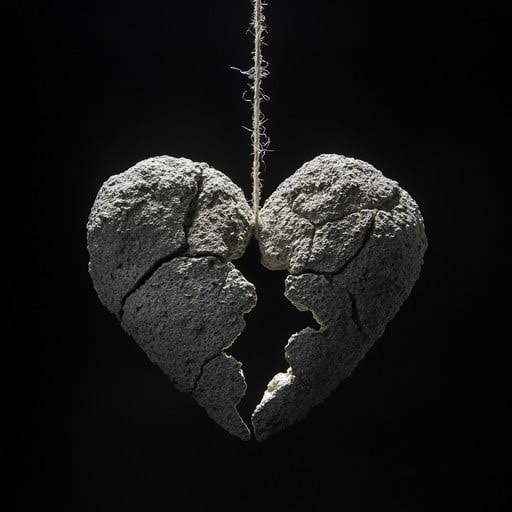
  • I Built a Heart Upon the Air

    I Built a Heart Upon the Air

    I built a heart upon the air,
    Each breath a thread, each whisper fair,
    A tapestry of hopes and dreams,
    A vision born from love’s soft beams.

    With fragile hands I wove each part,
    A fragile thing, a fragile heart,
    Through tears and laughter, joy and pain,
    I shaped it in the softest rain.

    I wove the threads from distant light,
    From hopes that soared, from winds so bright,
    I fashioned it of silken strands,
    A promise placed in trembling hands.

    Each note of hope, a golden strand,
    I wove it high upon the land,
    The breeze it swayed, the stars they sang,
    As joy and sorrow softly rang.

    But shadows rose to steal my dream,
    And whisper words that coldly gleam,
    That hearts of air must fall, must break,
    For nothing pure can ever wake.

    And though I hoped, I knew the sound—
    Of my heart crumbling to the ground.
    Could you see me? Could you know—
    The weight of love, the weight of woe?

    And still, I wait in quiet grief,
    To find some solace, some relief,
    Will you hear my quiet plea?
    Or am I lost upon the sea?

    The heart I built is all but dust,
    It crumbles now, it turns to rust.
    Will love remain or fade from sight?
    Will hearts of air still take to flight?

    I built a heart upon the air,
    Each breath a thread, each whisper fair,
    And though it’s gone, I still believe
    In hearts that soar, and hearts that grieve.

    For even when the threads are torn,
    We rise again, reborn, reborn.
    And though my heart may fall again,
    I’ll build it once—then once again

  • The Weight of Feeling

    There are those who move through the world untouched, passing through sorrow like shadows through a field. They hear stories but do not listen, nod but do not absorb. They stand at the edges of suffering, an arm’s length away, unmoved by the quiet devastation beneath another’s skin.

    And then, there are those who feel.

    To hold empathy is to carry a burden no one else sees. It is to wake with a heart already heavy, to step into a room and know, instantly, what is unspoken. It is to watch a stranger’s face and feel the tremor beneath their smile. It is to stand before the hurting and ache as if their pain were your own.

    I have always felt too much.

    Even as a child, I would watch the shifting tide of a conversation and sense the undercurrents beneath. I would hear the hesitation, the faltering breath, the words unsaid—and they would settle inside me, pressing into my ribs, demanding to be known. I could not turn away. I could not close my eyes and walk on.

    And yet, the world does not feel the same way.

    I have seen how quickly people look away, how swiftly they dismiss what is inconvenient. I have watched cruelty be excused, discomfort be avoided, wounds be ignored simply because tending to them requires effort. And I have stood in the wreckage of it all, bewildered, wondering how it is possible to care so little.

    In the moments when I needed tenderness, when I stood open and raw, offering my grief, my fear, my truth—I have been met with indifference. I have known what it is to speak into silence, to stretch out my hands only to find emptiness where comfort should be.

    I do not understand how people live so lightly, how they step past suffering without a backward glance. I do not know what it is to feel nothing.

    I only know what it is to carry too much.

    To be the one who notices. The one who lingers. The one who stays up at night replaying a conversation, feeling another’s sorrow as if it were my own. The one who grieves for things long past, for people I will never see again, for the wounds I could not heal.

    I wonder sometimes if it is a gift or a curse.

    To feel the weight of the world when no one else seems to bear it. To be the only one standing in the wreckage while others walk on, untouched. To hold, always, the ache of what could have been, what should have been, if only others had chosen kindness.

    But if the choice is between numbness and this—this aching, breaking, unrelenting knowing—then I will bear it.

    Because someone has to.

    And if not me, then who?

  • The Plank Between Us

    Nothing prepares you for grief that is still breathing.

    For the weight of loss when there is no funeral, no finality, no neat ending that lets you fold it away.

    For grieving someone who is still out there, still walking, still laughing, still moving through the world—but not with you.

    We stood at the edge for so long, both of us knowing, both of us feeling the wind shake beneath our feet. But neither of us could walk the plank. Neither of us could be the first to let go. So we stayed, not together, not apart, unraveling thread by thread, until one day, the rope was gone and we were left with nothing but the empty space between us.

    I thought that would be the worst of it.

    But nothing prepares you for the way the world closes in, how it folds over itself, muffling color, dulling sound. How familiar places become graveyards of memory, how the air itself feels thick with absence.
    And nothing—nothing—prepares you for the knife that twists deeper when you watch from the sidelines.

    Watching him become everything I hoped, dreamed, begged for. Watching him rise into the man I always knew he could be—just not for me. Watching him step into the life I imagined, the one we spoke of in whispers, the one I ached for, the one I would have followed him into blindfolded—except now, someone else stands beside him.

    The world does not teach you what to do with that kind of pain.

    No one tells you how to breathe when the air is thick with all you lost. How to move forward when your shadow still stretches back toward him. How to stand steady when every step feels like walking on the ghost of what was.

    The love does not go away.

    It stays, an ache beneath the ribs, a quiet hum in the background of a new life. It does not demand. It does not fade. It simply is. A part of you, woven in, stitched between the person you were and the person you are still becoming.

    But you learn.

    You grow around it.

    You stretch, you expand, you widen your arms to hold new love, new laughter, new pieces of a life that was never meant to stop. You learn that grief does not shrink, but you grow. You make space for both the ache and the joy.

    And one day, you find yourself standing in the light again, not because you stopped loving, but because you learned how to love more.

    Because the heart—when broken, when shattered, when left behind—does not shrink.

    It learns to hold more than it ever thought it could.

  • The Weight of the World

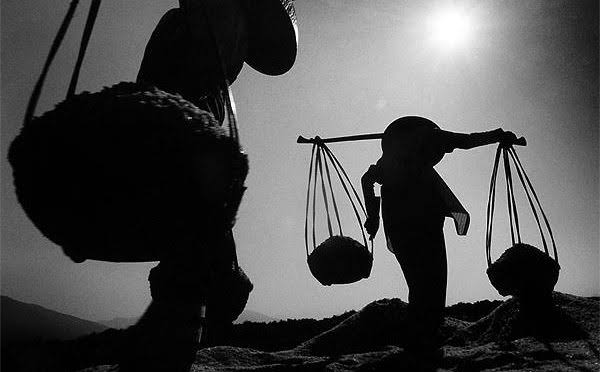
    Mission work is not for the faint of heart. It is a calling, a burden, a quiet surrender to something greater than oneself. It is the work of bridge-builders, of healers, of those who carry light into the forgotten corners of the world.

    In places where language flickers like a candle in the wind, missionaries hold the flame steady. They transcribe, they preserve, they speak words aloud so they will not be lost to time. They build schools where none stood before, open clinics where sickness once reigned unchecked. They fly where roads do not go, where rivers run deep and untamed, carrying hope in the belly of their planes. They carve airstrips from the wilderness, taming mountains and marshlands so that when the moment comes—when the radio crackles with an urgent plea, when a life hangs in the balance—help can reach the unreachable.

    They do not just bring supplies; they bring rescue. They lift the wounded from places the world has forgotten, from villages where accusations turn deadly, where hands meant for work are bound instead, where the innocent suffer beneath suspicion’s shadow. They go where others will not, stepping into the darkness to pull life from its grasp. And they do it not for recognition, nor for wealth, but because it must be done.

    Without them, what would be left? A world where voices fade, where knowledge is buried beneath the weight of progress, where the sick suffer without a hand to hold, without medicine to ease the pain.

    And yet, in a world brimming with noise about about the sins of those who came before, the work of missions is met with skepticism. The word itself is tangled in narratives of oppression, of histories rewritten to erase the good, to cast a shadow over the selflessness of those who go. But are these voices not speaking from places of comfort, from lives built on the very institutions they now scorn? They do not see the child grasping a pencil for the first time, the mother receiving life-saving medicine, the elder hearing their own tongue written on paper, preserved from vanishing forever.

    I walked those roads, I stood in those villages, I listened to the murmurs of a culture that was not my own, and I felt the weight of being an outsider. I had come to serve, to help, to give, and yet I was seen as other. My skin marked me, my presence unsettled. They spoke in words I did not understand, laughter curling at the edges, glances passing between them like secrets I would never know.

    I felt the sting of being foreign in a place where I had come only to love. I felt the walls rise around me, unseen but unyielding. I knew what it was to give everything and still be met with suspicion, to pour out and yet be turned away.

    But does that make the work any less important?

    Missionaries stand in the gap where no one else will. They step into the unknown, offering what they have, believing that even if they are not welcomed, their work will speak for itself. In nations straining beneath the weight of change, where ancient ways meet modern rule, missionaries are the steady hands, the voices of reason, the ones who hold fast when the ground shifts beneath them.

    The world moves forward, indifferent to what is lost along the way. But still, the work continues. The languages are written down. The sick are cared for. The airstrips are carved into the earth. The tortured are lifted from the ashes. The children learn to read. The planes take flight, skimming over jungle canopies, carrying medicine, carrying food, carrying prayers wrapped in aluminum wings.

    And maybe, one day, the world will see.