Tag: faith

  • When the Light Goes Out

    Grief didn’t come gently.
    It didn’t knock.
    It surged, sharp and uninvited, through my chest like a tide at midnight,
    leaving behind a silence I couldn’t unhear.

    My ribs barely held it.
    My lungs forgot how to draw breath.
    There was no space left for light.


    When I left Papua New Guinea, there was salt on my lips —
    not sea salt, but tears that poured out of the hardest goodbye.
    My soulmate stood on that tarmac, unmoving,
    and something sacred split in me
    as the plane peeled away from the green earth.

    I didn’t just leave a place.
    I left him. With my heart.
    The only him.
    The one my prayers had quietly wrapped themselves around.
    The one my future had dared to imagine in full colour.

    And just like that, the palette of life dimmed.

    Orange turned jagged, like betrayal.
    Blue became an ache, a hollow I couldn’t fill.
    Even white — once my breath of peace —
    felt like chalk in my mouth.

    That’s the trouble with feeling deeply:
    when the world breaks, it breaks your senses, too.


    No one saw.

    I smiled at the airport staff.
    Hugged family.
    Sent replies, politely hollow.
    But inside, I was curled small and silent,
    my soul heaving like a bellows with no flame.

    I couldn’t breathe.
    I couldn’t pray.
    I couldn’t remember what hope felt like.


    It was when I saw him from a distance that the ache turned into something else —
    something heavier.

    There he was, living — helping, pouring, giving.
    Still shining. Still good.
    And there I was, undone.
    A well with no bottom.
    A song without sound.

    He moved through the world like morning light,
    graceful and bright,
    while I became the shadow trailing behind —
    unnoticed, unneeded.

    And the thing no one ever tells you about grief
    is that it doesn’t just steal joy.
    It warps time.
    It lingers in slow motion,
    dragging your feet through days that used to dance.


    I kept reaching into the silence —
    messages, prayers, memory —
    hoping he’d feel something echo back.
    Hoping he’d turn around.

    But the silence stayed.
    And I realized:
    he wasn’t looking for me.
    He wasn’t looking back.

    He was mending others,
    healing what was broken in them.

    And I?

    I was a quiet ache in a crowded room.
    A hollow girl who once held his attention
    and now couldn’t even hold her own reflection without wincing.

    I waited for a sign that I was still seen,
    still worthy of return.
    But all I received
    was the quiet cruelty of being overlooked.


    Not broken enough to matter.
    Not chosen.

    That shame… it’s a whisper that stays.
    It crept behind me like a second skin, murmuring:
    You were not enough. Not for him. Not for anyone.

    And so I fell.
    And kept falling.

    Into a grief that didn’t look dramatic —
    it looked like laundry undone
    and bruises no one asked about.

    It looked like full inboxes
    and empty hearts.
    It looked like functioning.
    Like being fine.

    But I wasn’t fine.


    Some nights I curled into the smallest part of myself
    and tried to remember the curve of his smile —
    the one I’d carried across oceans.

    But even that began to fade.

    The memory of light
    slipping through my fingers,
    like dusk folding into night.

    At my lowest, I sat on the floor,
    back pressed to the wall,
    and wondered what it might feel like to disappear.

    Not dramatically.
    Just… quietly.
    Like a shadow in the wrong light.
    Like breath slipping from a tired body.

    But even that thought —
    it wasn’t death I longed for.
    It was rest.

    It was for someone, anyone, to notice the heaviness I was carrying
    and whisper,
    you don’t have to do this alone.

    Because I couldn’t carry it anymore.
    Not alone.


    I’m not writing from the other side.

    I’m still here.
    Still breathing.

    Some days the light breaks through
    and touches my skin like grace.

    And some days — like today —
    the world feels like glass,
    sharp and fragile,
    and I wonder if anyone hears
    the quiet cry of someone still in love with a ghost.


    But I write anyway.
    For you.

    You who feels invisible.
    You who wonders if your pain is too quiet, too messy, too much.
    You who once felt seen, and now feel hollow.

    You are not alone.

    This darkness is real,
    but it is not forever.

    Even now, I believe that the God who stays in the silence
    is still weaving hope into the shadows.


    One day, someone will see you.
    Truly see you —
    not just your brokenness,
    but your beauty.
    Your wholeness.

    So I breathe.
    I wait.
    I let the small shards of love pierce my palms,
    and I hold them like prayers.

    And for now — for this moment —
    that is enough.

  • International Women’s Day

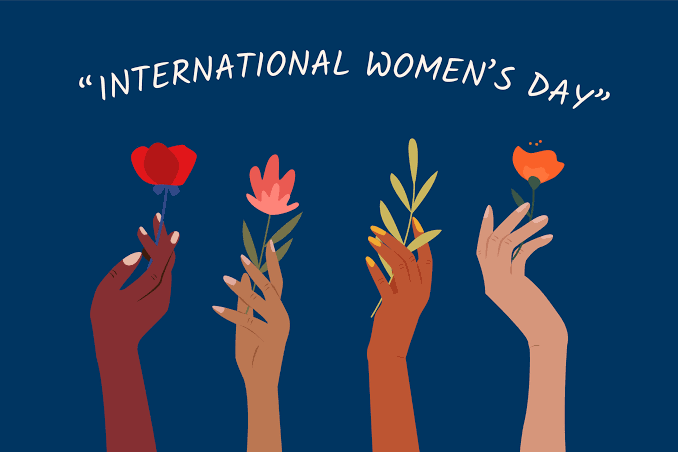
    Today is International Women’s Day—a day meant to celebrate the strength, resilience, and achievements of women. But I find myself reflecting on the ways women have also been the architects of some of my deepest wounds.

    In a world where women already face scrutiny, dismissal, and injustice, I never expected that my greatest injuries would come from the very people who should have stood beside me. Women who pried into my life under the guise of accountability. Women who whispered behind closed doors, who disguised their judgment as concern, who demanded answers they were never entitled to. Women who, instead of lifting me up, placed weights upon my shoulders that I was never meant to carry.

    Living as a woman in a place that already struggled to see our worth was hard enough. My gender was a constant reason to be dismissed. My age, my race, my marital status, my presence—reasons to be overlooked, questioned, and mocked on a daily basis. And yet, instead of refuge, I found further injury in the company of women. The ones who should have understood. The ones who should have known better.

    And now, when I speak of the pain that was inflicted, I am told that I should be more uplifting. That my words should inspire, not burden. That I should move on, heal, be grateful for the suffering that has somehow made me stronger. As though I chose this suffering. As though these wounds were self-inflicted, instead of the result of hands that tore down rather than built up.

    Even my deepest heartbreak—the loss of the one who taught me what it meant to love—was in part shaped by these wounds. By the endless scrutiny, the whispered accusations, the quiet destruction wrought by those who saw themselves as righteous. And yet, when I grieve, I am told that I should be silent. That faith should mend what was broken, that trust in God should be enough to erase the scars.

    But faith is not the absence of suffering, and healing is not the same as forgetting. Christ carried His cross, not because He deserved to suffer, but because He chose to bear the weight of what others placed upon Him. And while I am no savior, I, too, find myself bearing burdens I did not ask for, carrying wounds that were never mine to inflict.

    So on this International Women’s Day, I do not simply call for celebration. I call for reckoning. For a recognition of the ways we, as women, have failed one another. For a shift in how we see each other—not as competition, not as projects to fix or control, not as threats—but as fellow sojourners in a world that is already too heavy with injustice.

    May we, instead of wounding, learn to heal. May we, instead of judging, learn to understand. And may we never again be the ones placing the cross on another woman’s back.

  • The Quiet Power of Kindness


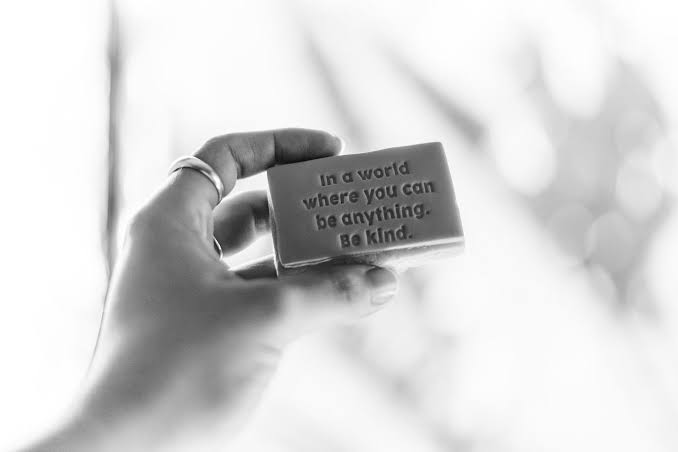
    It costs nothing, yet its impact is immeasurable. It leaves no visible trace, yet it lingers in the heart long after it is given. Kindness is not grand or showy; it does not demand attention. It is the quiet force that holds the world together, stitching unseen wounds and softening the sharp edges of life.

    We often think of kindness as a response to visible need—a hand extended to someone who has stumbled, a comforting word to someone in obvious distress. But the truth is, most struggles are silent. The colleague who snaps in frustration may be carrying the weight of a sleepless night. The stranger who bumps into you without apology might be lost in grief. The friend who cancels plans yet again may be battling unseen exhaustion. Pain does not always announce itself. And so, kindness must not be conditional upon it.

    To be kind is to recognize that everyone carries burdens we cannot see. It is to extend gentleness, not because it has been earned, but because it is needed. A simple smile, a word of encouragement, a moment of patience—these are the smallest of gestures, yet they have the power to shift the course of a day, or even a life.

    We live in a world that often rewards efficiency over empathy, where busyness is mistaken for importance and where kindness can feel like an afterthought. But what if we placed it at the forefront? What if we made it a habit, not just an impulse? What if kindness became our first instinct, rather than something we offer when it is convenient?

    We may never know the full impact of the kindness we extend. A kind word spoken today might be the thing someone holds onto for years. A moment of grace might be the reason someone believes in goodness again.

    The beauty of kindness is that it does not require us to understand another’s struggle fully; it only asks that we respond with care.

    So let us be kind, not only when it is easy, not only when the need is obvious, but always. Because if we are not kind to each other, who will be?