We spoke in whispers, soft and low, In laughter’s light, in embers’ glow. In quiet prayers and silver streams, We wove our hearts, we built our dreams.
You knew my fears, my weary sighs, The light that danced behind my eyes. You held my hope, you knew my name, Before the silence, before it changed.
I did not choose to walk away, But winds arose, I could not stay. The tether snapped, the distance grew, And love turned ghostly, pale and blue.
I knocked, I called, I sent my plea, But doors don’t open without a key. And echoes fade behind cold walls, No matter how a heartbeat calls.
Yet if I spoke, it would be low, A whisper soft, a sorrowed glow. If I could see you, just once more, I’d smile like I had done before.
Not for the ache, not for the pain, But for the love that still remains.
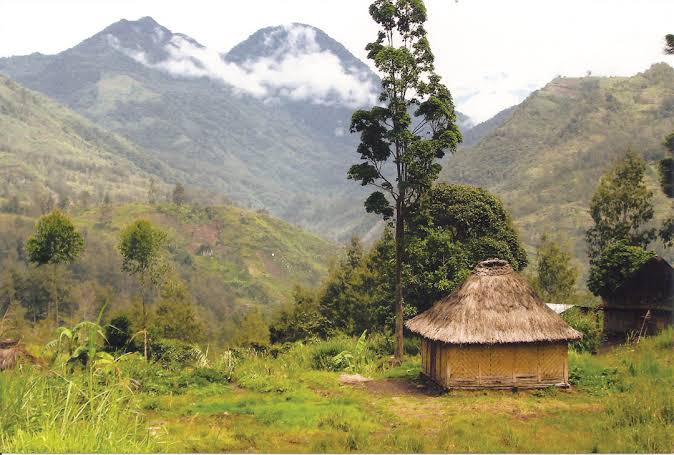
Missionary work is often spoken of in terms of sacrifice—leaving behind the familiar, stepping into the unknown, giving of oneself for a higher purpose. What is less discussed is the complexity of the community itself—the way relationships are not only formed but also scrutinized, the way expectations press in from all sides, and the way personal lives can become the subject of unwanted discussion.
I arrived open-hearted, eager to contribute, ready to learn. But I quickly discovered that life among missionaries was not just about the work; it was about navigating an intricate web of expectations, where personal boundaries were often blurred. Questions came freely, sometimes under the guise of concern, other times with a quiet insistence that made it clear they were not really questions at all. Where was I headed? What were my long-term plans? Was I committed to staying? These were not simple curiosities—they carried weight, an unspoken pressure to declare intentions before I had even found my footing.
My relationships, too, became a subject of discussion beyond my control. Conversations I had not yet had for myself were already being speculated on in forums where I was unprepared to address them. Older missionaries—some with good intentions, others with a sense of authority—pried into matters I would have preferred to keep private. They dissected my choices, offered unsolicited advice, and sometimes spoke as though they had a stake in decisions that belonged to me alone.
I wanted to be helpful, to contribute, to prove that I belonged. But my efforts were not always met with encouragement. At times, my willingness to step in and assist was seen not as a strength but as something to be tempered—as if I needed to be reminded of my place. I learned that offering help did not always mean being welcomed. Sometimes, it was taken as a challenge, as if my presence unsettled the unspoken order of things.
And yet, even in the midst of these challenges, there were those who brought light. Kind souls—often from outside the circles I was part of—offered gentle conversations, safe places where I could be honest about my struggles without fear of judgment. They checked in, brought quiet understanding, and reminded me that not everyone operated by the same unspoken rules. When the weight of expectations became too much, they provided sanctuary. They were the ones who saw me not as a project to be managed, but as a person to be cared for.
Looking back, I do not fault those who asked too much of me, who pried where they shouldn’t have, who unknowingly added to my burdens. They were part of a system that had shaped them, just as it had begun to shape me. But I see now that support is not just about expectation—it is about presence. It is about listening without demanding answers, offering guidance without insisting on control, and creating space for growth rather than forcing a path.
And for those who did that—for those who simply sat with me, walked alongside me, and reminded me that I was not alone—I will always be grateful.
Resilience is not just survival. It is not just enduring. It is not just standing upright beneath a weight that should have crushed me.
For years, I thought resilience meant suppressing my pain, swallowing my shame, and moving forward without flinching. I thought it meant being strong enough to endure rejection, failure, and loss without breaking. But I have learned that true resilience is not about how much I can bear—it is about how much I can release.
I have carried so much shame.
The shame of rejection. Of not being chosen. Of waiting for someone to come good, only to be met with silence. The shame of being a puppet in someone else’s game, of being used, discarded, and dismissed when I sought answers, when I demanded reparations.
The shame of being too introverted for the role I was expected to play. Of feeling alien in an environment that assaulted my senses. The shame of longing for beauty in a world that expected me to accept filth. The shame of exhaustion, of needing rest when I was told to push through. The shame of being let down by friends, of realizing they would not—could not—fight for me the way I had fought for them.
And worst of all, the shame of feeling like even God had turned His back on me.
I came home broken—physically, emotionally, spiritually. And the voices of the faithful told me it was my own fault. “Oh ye of little faith,” they said, as though faith alone should have been enough to keep me from collapsing under the weight of it all.
And so I carried even more shame.
But resilience is about unlearning that shame. It is about seeing the truth: that I was not weak, only human. That I was not unworthy, only wounded. That I did not fail—I survived.
Trauma does not just leave bruises on the heart; it seeps into the mind, into the very way I see the world. It left me paralyzed, unable to make plans, unable to picture a future. It taught me that hope was dangerous, that expectations only led to disappointment. And in the moments I needed connection the most, it kept me locked in silence.
I see it now.
I see how I lashed out in my own pain when silence was all I received in return. I see how I longed for certainty, for clarity, for direction, while someone else was frozen in fear, unable to answer the questions I so desperately needed resolved. I see how trauma response was meeting trauma response, and we only ever hurt each other more.
And now I lay it down.
The shame. The guilt. The need for answers. The desire for reparations that will never come.
I do not need their apology to heal. I do not need their recognition to be whole. I do not need permission to exist fully, freely, without shame.
Resilience is about creating a home in myself where I am not judged, abandoned, or rejected. It is about carrying that home with me so I am no longer at anyone else’s mercy. And in that home, I have found that God was never the one who turned away from me.
I had mistaken the cruelty of people for the absence of God. I had let the failures of churches convince me that He had failed me too. But He was always there—in the quiet, in the stillness, in the moments I thought I was alone.
God is not a church. He is not a system. He is not an institution that protects its own at the expense of the wounded. He is not the voices that dismissed me. He is not the ones who looked the other way.
He is the quiet whisper in my heart. He is the one who saw every injustice, every betrayal, every tear. And He is the one who is still calling me—not to penance, not to suffering, not to proving my worth, but to freedom.
I am not what happened to me.
I am not the rejection. I am not the silence. I am not the failures of others to see my worth.

 Girl Kaleidoscope