
Tag: Be kind to others

  • The Kindness He Kept

    He was a man who had every reason to turn bitter. I watched as the world demanded of him, took from him, misunderstood him. I watched them wound him with carelessness, with cruelty, with the sharp edge of their own relentless expectations. And yet, he remained kind. He carried his grief, his heartbreak, his exhaustion like a second skin—but never used it as a weapon.

    He loved and lost, and still, he was kind.

    I have never known a strength greater than that.

    It is easy to be gentle when life is soft, when love is returned in equal measure, when the road is smooth beneath your feet. But kindness in the midst of suffering, kindness when the world turns its back on you—that is something else entirely. That is defiant. That is holy.

    I loved him back with a fierceness that could split the heavens. And yet, the cruel hands of circumstance pried us apart—geography, grief, the weight of too many wounds. It was not a lack of love that separated us. It was the way life itself can bend two souls in opposite directions, despite their longing to stay entwined.

    And now, they tell me to let go. To move on. To unwrite the story that was carved into the marrow of my being.

    But how do you let go of the one who taught you how to love?

    What do I do with the unsent letters, ink blurred by tears? What do I do with the messages I never sent, the words that curled in my throat but never reached his ears? What do I do with the ache of knowing what I walked away from?

    He was the best of us. He didn’t measure kindness in worthiness. He gave it because it was who he was. Because love, real love, does not keep a tally.

    And in the end, when he thought himself unworthy of me, I made the hardest choice. I left. I chose myself.
    And I have been at war with that choice ever since.

    This is the conflict I carry—the unbearable paradox of walking away from my hero, from the one who showed me love in its purest form. I do not regret loving him. I only regret that love alone was not enough to keep us in the same place.

    And yet, even now, I know what he would say. He would tell me to be kind—to myself, to the world, to the pain that still lingers.

    And so I try. Because he loved and lost and was still kind. And maybe, just maybe, I can be too.
  • Judgemental Healing

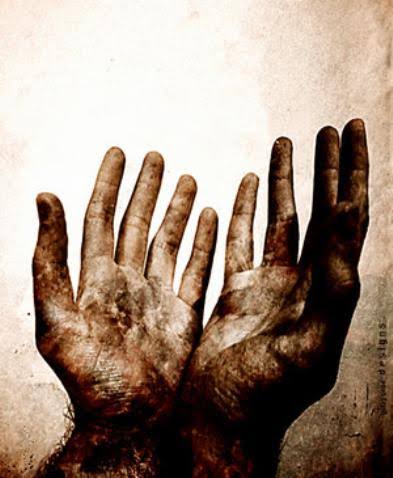
    There is a painful irony in how suffering is often treated in Christian circles. Instead of being met with compassion, many who endure deep wounds are met with judgment, rushed expectations, and an almost casual dismissal of their grief. Rather than acknowledging the depths of someone’s pain, the response is often, “You just need to trust God more,” or, “You need to let go and move on.”

    As if I—or you—chose this suffering.

    As if we inflicted these wounds upon ourselves.

    But we didn’t. These wounds were inflicted upon us. Someone else took away the future we were meant to step into, leaving behind grief and devastation. And yet, the responsibility to heal, to “overcome,” is placed squarely on our shoulders. We are told that our lingering pain is a sign of weak faith, that our sorrow is an indication of spiritual failure.

    This is not just frustrating—it is harmful. It is a deep betrayal by those who should know better.

    Imagine a person who has been physically injured by another. The wounds are not self-inflicted. They were harmed, perhaps violently, by someone else’s actions. No one would expect such a person to leap to their feet and walk without a limp. No one would shame them for needing crutches. And yet, when it comes to emotional and spiritual wounds, this is exactly what happens. Instead of being offered a place to rest and recover, we are pushed forward, expected to act as if the injury never happened.

    The Bible does not teach this kind of cold dismissal. Jesus Himself did not treat suffering this way. He was moved by compassion when He saw the brokenhearted. He did not say to the weeping, “Ye of little faith.” Instead, He wept with them. He did not tell the suffering to “get over it.” He sat with them, touched them, healed them in His time. Even after His resurrection, His wounds remained visible. He carried the scars of suffering with Him—proof that healing does not mean erasing what has happened.

    So why do so many Christians behave otherwise? Why do they turn a blind eye to pain, assuming that if time has passed, healing should be complete? Why is it easier to tell someone to suppress their grief than to sit with them in it? Why is it so difficult for people to admit that some pain will always linger, that faith does not erase suffering, but rather sustains us through it?

    I have struggled with this deeply. I have wanted to cry out my innocence, to prove my suffering, to explain in painstaking detail why I am not at fault. I have wanted to defend myself against those who assume that if I am still hurting, it must be my own doing. I have wanted to shout from the rooftops that I did not choose this, that this pain was not my doing, that I did not invite it into my life. And yet, I have been met with silence, or worse—accusations.

    For all the talk of grace in Christian communities, there is often so little grace for those who suffer in a way that makes others uncomfortable. Grief is untidy. Trauma does not adhere to socially acceptable timeframes. Some wounds will never fully close, and that does not mean we lack faith—it means we are human. And if our faith is to mean anything, it must be one that allows for the fullness of our humanity, not just the palatable parts.

    Perhaps it is time for a shift. Perhaps instead of judging how long it takes someone to heal, we should offer the space to grieve. Perhaps instead of demanding someone “move on,” we should sit beside them and ask, “What do you need today?” Perhaps instead of weaponizing faith as a tool to silence pain, we should embody the very compassion of Christ, who never turned away from the brokenhearted.

    To those who have been told to “just get over it,” I see you. I hear you. You are not alone. And your suffering does not make you weak—it makes you real. And that is something even Jesus Himself understood.