Tag: Be Kind

  • When the Light Goes Out

    Grief didn’t come gently.
    It didn’t knock.
    It surged, sharp and uninvited, through my chest like a tide at midnight,
    leaving behind a silence I couldn’t unhear.

    My ribs barely held it.
    My lungs forgot how to draw breath.
    There was no space left for light.


    When I left Papua New Guinea, there was salt on my lips —
    not sea salt, but tears that poured out of the hardest goodbye.
    My soulmate stood on that tarmac, unmoving,
    and something sacred split in me
    as the plane peeled away from the green earth.

    I didn’t just leave a place.
    I left him. With my heart.
    The only him.
    The one my prayers had quietly wrapped themselves around.
    The one my future had dared to imagine in full colour.

    And just like that, the palette of life dimmed.

    Orange turned jagged, like betrayal.
    Blue became an ache, a hollow I couldn’t fill.
    Even white — once my breath of peace —
    felt like chalk in my mouth.

    That’s the trouble with feeling deeply:
    when the world breaks, it breaks your senses, too.


    No one saw.

    I smiled at the airport staff.
    Hugged family.
    Sent replies, politely hollow.
    But inside, I was curled small and silent,
    my soul heaving like a bellows with no flame.

    I couldn’t breathe.
    I couldn’t pray.
    I couldn’t remember what hope felt like.


    It was when I saw him from a distance that the ache turned into something else —
    something heavier.

    There he was, living — helping, pouring, giving.
    Still shining. Still good.
    And there I was, undone.
    A well with no bottom.
    A song without sound.

    He moved through the world like morning light,
    graceful and bright,
    while I became the shadow trailing behind —
    unnoticed, unneeded.

    And the thing no one ever tells you about grief
    is that it doesn’t just steal joy.
    It warps time.
    It lingers in slow motion,
    dragging your feet through days that used to dance.


    I kept reaching into the silence —
    messages, prayers, memory —
    hoping he’d feel something echo back.
    Hoping he’d turn around.

    But the silence stayed.
    And I realized:
    he wasn’t looking for me.
    He wasn’t looking back.

    He was mending others,
    healing what was broken in them.

    And I?

    I was a quiet ache in a crowded room.
    A hollow girl who once held his attention
    and now couldn’t even hold her own reflection without wincing.

    I waited for a sign that I was still seen,
    still worthy of return.
    But all I received
    was the quiet cruelty of being overlooked.


    Not broken enough to matter.
    Not chosen.

    That shame… it’s a whisper that stays.
    It crept behind me like a second skin, murmuring:
    You were not enough. Not for him. Not for anyone.

    And so I fell.
    And kept falling.

    Into a grief that didn’t look dramatic —
    it looked like laundry undone
    and bruises no one asked about.

    It looked like full inboxes
    and empty hearts.
    It looked like functioning.
    Like being fine.

    But I wasn’t fine.


    Some nights I curled into the smallest part of myself
    and tried to remember the curve of his smile —
    the one I’d carried across oceans.

    But even that began to fade.

    The memory of light
    slipping through my fingers,
    like dusk folding into night.

    At my lowest, I sat on the floor,
    back pressed to the wall,
    and wondered what it might feel like to disappear.

    Not dramatically.
    Just… quietly.
    Like a shadow in the wrong light.
    Like breath slipping from a tired body.

    But even that thought —
    it wasn’t death I longed for.
    It was rest.

    It was for someone, anyone, to notice the heaviness I was carrying
    and whisper,
    you don’t have to do this alone.

    Because I couldn’t carry it anymore.
    Not alone.


    I’m not writing from the other side.

    I’m still here.
    Still breathing.

    Some days the light breaks through
    and touches my skin like grace.

    And some days — like today —
    the world feels like glass,
    sharp and fragile,
    and I wonder if anyone hears
    the quiet cry of someone still in love with a ghost.


    But I write anyway.
    For you.

    You who feels invisible.
    You who wonders if your pain is too quiet, too messy, too much.
    You who once felt seen, and now feel hollow.

    You are not alone.

    This darkness is real,
    but it is not forever.

    Even now, I believe that the God who stays in the silence
    is still weaving hope into the shadows.


    One day, someone will see you.
    Truly see you —
    not just your brokenness,
    but your beauty.
    Your wholeness.

    So I breathe.
    I wait.
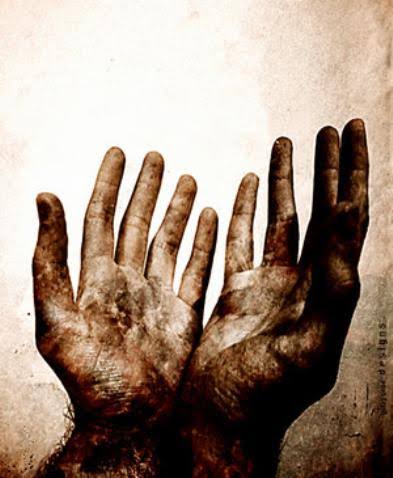
    I let the small shards of love pierce my palms,
    and I hold them like prayers.

    And for now — for this moment —
    that is enough.

  • The Kindness He Kept

    He was a man who had every reason to turn bitter. I watched as the world demanded of him, took from him, misunderstood him. I watched them wound him with carelessness, with cruelty, with the sharp edge of their own relentless expectations. And yet, he remained kind. He carried his grief, his heartbreak, his exhaustion like a second skin—but never used it as a weapon.

    He loved and lost, and still, he was kind.

    I have never known a strength greater than that.

    It is easy to be gentle when life is soft, when love is returned in equal measure, when the road is smooth beneath your feet. But kindness in the midst of suffering, kindness when the world turns its back on you—that is something else entirely. That is defiant. That is holy.

    I loved him back with a fierceness that could split the heavens. And yet, the cruel hands of circumstance pried us apart—geography, grief, the weight of too many wounds. It was not a lack of love that separated us. It was the way life itself can bend two souls in opposite directions, despite their longing to stay entwined.

    And now, they tell me to let go. To move on. To unwrite the story that was carved into the marrow of my being.

    But how do you let go of the one who taught you how to love?

    What do I do with the unsent letters, ink blurred by tears? What do I do with the messages I never sent, the words that curled in my throat but never reached his ears? What do I do with the ache of knowing what I walked away from?

    He was the best of us. He didn’t measure kindness in worthiness. He gave it because it was who he was. Because love, real love, does not keep a tally.

    And in the end, when he thought himself unworthy of me, I made the hardest choice. I left. I chose myself.
    And I have been at war with that choice ever since.

    This is the conflict I carry—the unbearable paradox of walking away from my hero, from the one who showed me love in its purest form. I do not regret loving him. I only regret that love alone was not enough to keep us in the same place.

    And yet, even now, I know what he would say. He would tell me to be kind—to myself, to the world, to the pain that still lingers.

    And so I try. Because he loved and lost and was still kind. And maybe, just maybe, I can be too.

  • Judgemental Healing

    There is a painful irony in how suffering is often treated in Christian circles. Instead of being met with compassion, many who endure deep wounds are met with judgment, rushed expectations, and an almost casual dismissal of their grief. Rather than acknowledging the depths of someone’s pain, the response is often, “You just need to trust God more,” or, “You need to let go and move on.”

    As if I—or you—chose this suffering.

    As if we inflicted these wounds upon ourselves.

    But we didn’t. These wounds were inflicted upon us. Someone else took away the future we were meant to step into, leaving behind grief and devastation. And yet, the responsibility to heal, to “overcome,” is placed squarely on our shoulders. We are told that our lingering pain is a sign of weak faith, that our sorrow is an indication of spiritual failure.

    This is not just frustrating—it is harmful. It is a deep betrayal by those who should know better.

    Imagine a person who has been physically injured by another. The wounds are not self-inflicted. They were harmed, perhaps violently, by someone else’s actions. No one would expect such a person to leap to their feet and walk without a limp. No one would shame them for needing crutches. And yet, when it comes to emotional and spiritual wounds, this is exactly what happens. Instead of being offered a place to rest and recover, we are pushed forward, expected to act as if the injury never happened.

    The Bible does not teach this kind of cold dismissal. Jesus Himself did not treat suffering this way. He was moved by compassion when He saw the brokenhearted. He did not say to the weeping, “Ye of little faith.” Instead, He wept with them. He did not tell the suffering to “get over it.” He sat with them, touched them, healed them in His time. Even after His resurrection, His wounds remained visible. He carried the scars of suffering with Him—proof that healing does not mean erasing what has happened.

    So why do so many Christians behave otherwise? Why do they turn a blind eye to pain, assuming that if time has passed, healing should be complete? Why is it easier to tell someone to suppress their grief than to sit with them in it? Why is it so difficult for people to admit that some pain will always linger, that faith does not erase suffering, but rather sustains us through it?

    I have struggled with this deeply. I have wanted to cry out my innocence, to prove my suffering, to explain in painstaking detail why I am not at fault. I have wanted to defend myself against those who assume that if I am still hurting, it must be my own doing. I have wanted to shout from the rooftops that I did not choose this, that this pain was not my doing, that I did not invite it into my life. And yet, I have been met with silence, or worse—accusations.

    For all the talk of grace in Christian communities, there is often so little grace for those who suffer in a way that makes others uncomfortable. Grief is untidy. Trauma does not adhere to socially acceptable timeframes. Some wounds will never fully close, and that does not mean we lack faith—it means we are human. And if our faith is to mean anything, it must be one that allows for the fullness of our humanity, not just the palatable parts.

    Perhaps it is time for a shift. Perhaps instead of judging how long it takes someone to heal, we should offer the space to grieve. Perhaps instead of demanding someone “move on,” we should sit beside them and ask, “What do you need today?” Perhaps instead of weaponizing faith as a tool to silence pain, we should embody the very compassion of Christ, who never turned away from the brokenhearted.

    To those who have been told to “just get over it,” I see you. I hear you. You are not alone. And your suffering does not make you weak—it makes you real. And that is something even Jesus Himself understood.

  • The Weight of Feeling

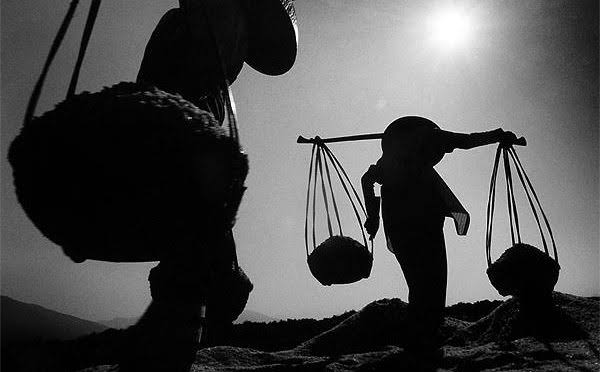
    There are those who move through the world untouched, passing through sorrow like shadows through a field. They hear stories but do not listen, nod but do not absorb. They stand at the edges of suffering, an arm’s length away, unmoved by the quiet devastation beneath another’s skin.

    And then, there are those who feel.

    To hold empathy is to carry a burden no one else sees. It is to wake with a heart already heavy, to step into a room and know, instantly, what is unspoken. It is to watch a stranger’s face and feel the tremor beneath their smile. It is to stand before the hurting and ache as if their pain were your own.

    I have always felt too much.

    Even as a child, I would watch the shifting tide of a conversation and sense the undercurrents beneath. I would hear the hesitation, the faltering breath, the words unsaid—and they would settle inside me, pressing into my ribs, demanding to be known. I could not turn away. I could not close my eyes and walk on.

    And yet, the world does not feel the same way.

    I have seen how quickly people look away, how swiftly they dismiss what is inconvenient. I have watched cruelty be excused, discomfort be avoided, wounds be ignored simply because tending to them requires effort. And I have stood in the wreckage of it all, bewildered, wondering how it is possible to care so little.

    In the moments when I needed tenderness, when I stood open and raw, offering my grief, my fear, my truth—I have been met with indifference. I have known what it is to speak into silence, to stretch out my hands only to find emptiness where comfort should be.

    I do not understand how people live so lightly, how they step past suffering without a backward glance. I do not know what it is to feel nothing.

    I only know what it is to carry too much.

    To be the one who notices. The one who lingers. The one who stays up at night replaying a conversation, feeling another’s sorrow as if it were my own. The one who grieves for things long past, for people I will never see again, for the wounds I could not heal.

    I wonder sometimes if it is a gift or a curse.

    To feel the weight of the world when no one else seems to bear it. To be the only one standing in the wreckage while others walk on, untouched. To hold, always, the ache of what could have been, what should have been, if only others had chosen kindness.

    But if the choice is between numbness and this—this aching, breaking, unrelenting knowing—then I will bear it.

    Because someone has to.

    And if not me, then who?

  • The Plank Between Us

    Nothing prepares you for grief that is still breathing.

    For the weight of loss when there is no funeral, no finality, no neat ending that lets you fold it away.

    For grieving someone who is still out there, still walking, still laughing, still moving through the world—but not with you.

    We stood at the edge for so long, both of us knowing, both of us feeling the wind shake beneath our feet. But neither of us could walk the plank. Neither of us could be the first to let go. So we stayed, not together, not apart, unraveling thread by thread, until one day, the rope was gone and we were left with nothing but the empty space between us.

    I thought that would be the worst of it.

    But nothing prepares you for the way the world closes in, how it folds over itself, muffling color, dulling sound. How familiar places become graveyards of memory, how the air itself feels thick with absence.
    And nothing—nothing—prepares you for the knife that twists deeper when you watch from the sidelines.

    Watching him become everything I hoped, dreamed, begged for. Watching him rise into the man I always knew he could be—just not for me. Watching him step into the life I imagined, the one we spoke of in whispers, the one I ached for, the one I would have followed him into blindfolded—except now, someone else stands beside him.

    The world does not teach you what to do with that kind of pain.

    No one tells you how to breathe when the air is thick with all you lost. How to move forward when your shadow still stretches back toward him. How to stand steady when every step feels like walking on the ghost of what was.

    The love does not go away.

    It stays, an ache beneath the ribs, a quiet hum in the background of a new life. It does not demand. It does not fade. It simply is. A part of you, woven in, stitched between the person you were and the person you are still becoming.

    But you learn.

    You grow around it.

    You stretch, you expand, you widen your arms to hold new love, new laughter, new pieces of a life that was never meant to stop. You learn that grief does not shrink, but you grow. You make space for both the ache and the joy.

    And one day, you find yourself standing in the light again, not because you stopped loving, but because you learned how to love more.

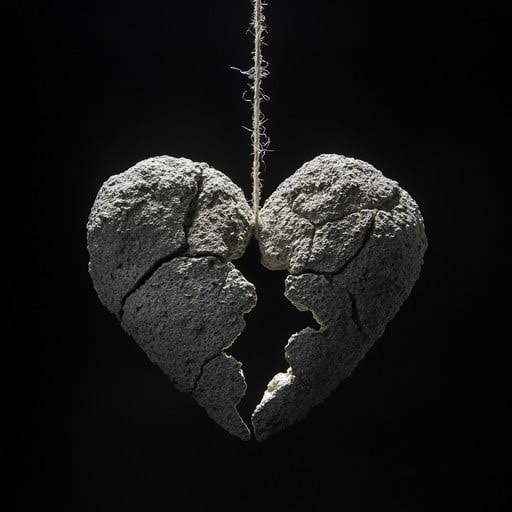
    Because the heart—when broken, when shattered, when left behind—does not shrink.

    It learns to hold more than it ever thought it could.

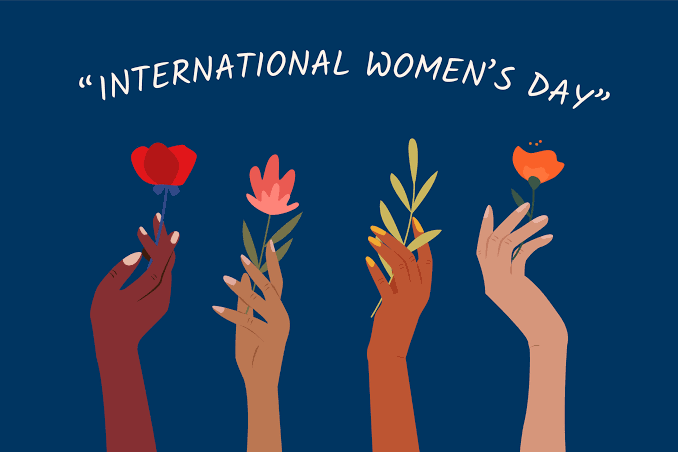
  • International Women’s Day

    Today is International Women’s Day—a day meant to celebrate the strength, resilience, and achievements of women. But I find myself reflecting on the ways women have also been the architects of some of my deepest wounds.

    In a world where women already face scrutiny, dismissal, and injustice, I never expected that my greatest injuries would come from the very people who should have stood beside me. Women who pried into my life under the guise of accountability. Women who whispered behind closed doors, who disguised their judgment as concern, who demanded answers they were never entitled to. Women who, instead of lifting me up, placed weights upon my shoulders that I was never meant to carry.

    Living as a woman in a place that already struggled to see our worth was hard enough. My gender was a constant reason to be dismissed. My age, my race, my marital status, my presence—reasons to be overlooked, questioned, and mocked on a daily basis. And yet, instead of refuge, I found further injury in the company of women. The ones who should have understood. The ones who should have known better.

    And now, when I speak of the pain that was inflicted, I am told that I should be more uplifting. That my words should inspire, not burden. That I should move on, heal, be grateful for the suffering that has somehow made me stronger. As though I chose this suffering. As though these wounds were self-inflicted, instead of the result of hands that tore down rather than built up.

    Even my deepest heartbreak—the loss of the one who taught me what it meant to love—was in part shaped by these wounds. By the endless scrutiny, the whispered accusations, the quiet destruction wrought by those who saw themselves as righteous. And yet, when I grieve, I am told that I should be silent. That faith should mend what was broken, that trust in God should be enough to erase the scars.

    But faith is not the absence of suffering, and healing is not the same as forgetting. Christ carried His cross, not because He deserved to suffer, but because He chose to bear the weight of what others placed upon Him. And while I am no savior, I, too, find myself bearing burdens I did not ask for, carrying wounds that were never mine to inflict.

    So on this International Women’s Day, I do not simply call for celebration. I call for reckoning. For a recognition of the ways we, as women, have failed one another. For a shift in how we see each other—not as competition, not as projects to fix or control, not as threats—but as fellow sojourners in a world that is already too heavy with injustice.

    May we, instead of wounding, learn to heal. May we, instead of judging, learn to understand. And may we never again be the ones placing the cross on another woman’s back.