Welcome to WordPress! This is your first post. Edit or delete it to take the first step in your blogging journey.
Category: Uncategorized
-
Faith in the Fog
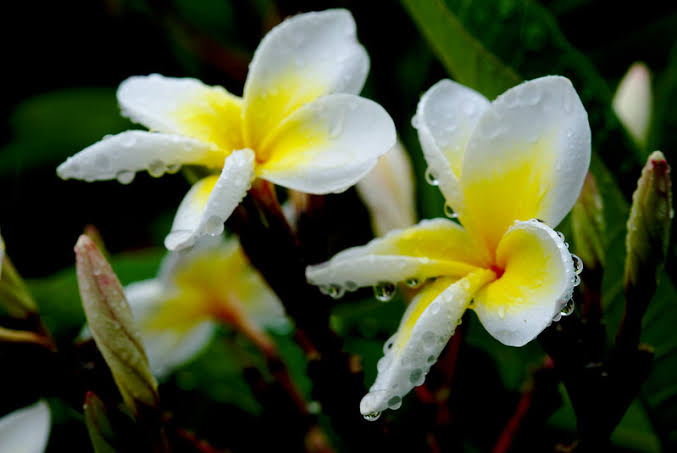
I used to think faith looked like fire —
bright, bold, unmistakable.
I thought it would always burn hot in my chest, always feel like certainty, always sound like singing.But lately, faith feels more like fog.
Not gone, just… harder to hold.
I still believe — but now, belief looks quieter. It looks like choosing to stay
even when I don’t feel anything. Even when the sky doesn’t answer back.
I wake up some mornings and whisper,
“Are You still here?”
Not because I doubt He exists,
but because I can’t feel Him
like I used to.There was a time when I would hear Him
in every song,
see Him in every sunrise,
sense Him in every silent moment.Now, the silence feels heavier.
Now, prayer feels like writing letters
with no return address.And honestly, sometimes I feel like I’ve been left on read —
not just by heaven,
but by the people I trusted most.
Rejection came from the places I never expected.
Friends who turned away
when I was too much, too broken, too inconvenient.
A soulmate who wouldn’t walk with me
through the messy truth of what happened —
the trauma, the abuse, the parts of my story that aren’t tidy enough for newsletters.I was left to carry it alone.
Ashamed.
Exposed.
Unchosen.And yet —
even in all that,
God never turned His face from me.He didn’t flinch.
He didn’t walk away.
He never said, “This is too much.”
That’s the thing about fog.
You can’t always see who’s standing beside you.But that doesn’t mean you’re alone.
Faith is not the absence of fog.
It’s the decision to walk through it anyway.Not with boldness, always —
sometimes just with breath.Sometimes faith is a single step.
A whispered prayer.
A choice to keep the light on,
even when the room feels empty.
God isn’t less present in the fog.
He’s just… less obvious.Like breath on glass,
like wind through branches —
still there.
Still moving.
Still holding.
There’s a verse I come back to, over and over:
“For we live by faith, not by sight.” (2 Corinthians 5:7)
It’s easier to quote than to live.
But maybe that’s the whole point.Maybe real faith is forged here —
in the grey,
in the waiting,
in the long nights where nothing makes sense,
but we show up anyway.
I don’t have clarity today.
But I do have a candle.
I do have breath.
I do have the ache that reminds me I’m still alive
and somehow, still reaching for God
even when I can’t feel Him reach back.And maybe that’s enough for now.
-
I Built a Heart Upon the Air
I built a heart upon the air,
Each breath a thread, each whisper fair,
A tapestry of hopes and dreams,
A vision born from love’s soft beams.With fragile hands I wove each part,
A fragile thing, a fragile heart,
Through tears and laughter, joy and pain,
I shaped it in the softest rain.I wove the threads from distant light,
From hopes that soared, from winds so bright,
I fashioned it of silken strands,
A promise placed in trembling hands.Each note of hope, a golden strand,
I wove it high upon the land,
The breeze it swayed, the stars they sang,
As joy and sorrow softly rang.But shadows rose to steal my dream,
And whisper words that coldly gleam,
That hearts of air must fall, must break,
For nothing pure can ever wake.And though I hoped, I knew the sound—
Of my heart crumbling to the ground.
Could you see me? Could you know—
The weight of love, the weight of woe?And still, I wait in quiet grief,
To find some solace, some relief,
Will you hear my quiet plea?
Or am I lost upon the sea?The heart I built is all but dust,
It crumbles now, it turns to rust.
Will love remain or fade from sight?
Will hearts of air still take to flight?I built a heart upon the air,
Each breath a thread, each whisper fair,
And though it’s gone, I still believe
In hearts that soar, and hearts that grieve.For even when the threads are torn,
We rise again, reborn, reborn.
And though my heart may fall again,
I’ll build it once—then once again -
The Weight of the World
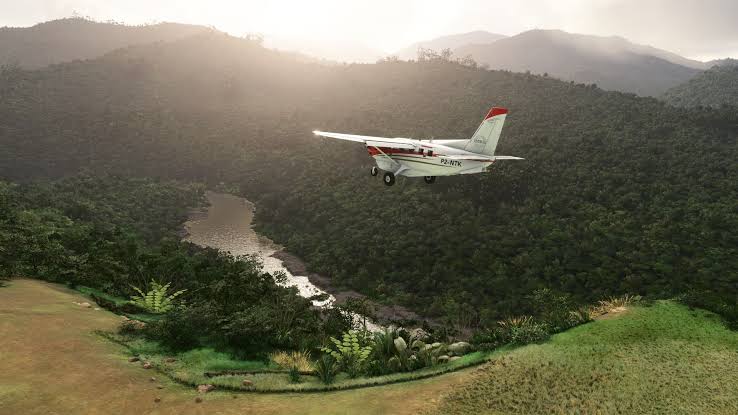
Mission work is not for the faint of heart. It is a calling, a burden, a quiet surrender to something greater than oneself. It is the work of bridge-builders, of healers, of those who carry light into the forgotten corners of the world.
In places where language flickers like a candle in the wind, missionaries hold the flame steady. They transcribe, they preserve, they speak words aloud so they will not be lost to time. They build schools where none stood before, open clinics where sickness once reigned unchecked. They fly where roads do not go, where rivers run deep and untamed, carrying hope in the belly of their planes. They carve airstrips from the wilderness, taming mountains and marshlands so that when the moment comes—when the radio crackles with an urgent plea, when a life hangs in the balance—help can reach the unreachable.
They do not just bring supplies; they bring rescue. They lift the wounded from places the world has forgotten, from villages where accusations turn deadly, where hands meant for work are bound instead, where the innocent suffer beneath suspicion’s shadow. They go where others will not, stepping into the darkness to pull life from its grasp. And they do it not for recognition, nor for wealth, but because it must be done.
Without them, what would be left? A world where voices fade, where knowledge is buried beneath the weight of progress, where the sick suffer without a hand to hold, without medicine to ease the pain.
And yet, in a world brimming with noise about about the sins of those who came before, the work of missions is met with skepticism. The word itself is tangled in narratives of oppression, of histories rewritten to erase the good, to cast a shadow over the selflessness of those who go. But are these voices not speaking from places of comfort, from lives built on the very institutions they now scorn? They do not see the child grasping a pencil for the first time, the mother receiving life-saving medicine, the elder hearing their own tongue written on paper, preserved from vanishing forever.
I walked those roads, I stood in those villages, I listened to the murmurs of a culture that was not my own, and I felt the weight of being an outsider. I had come to serve, to help, to give, and yet I was seen as other. My skin marked me, my presence unsettled. They spoke in words I did not understand, laughter curling at the edges, glances passing between them like secrets I would never know.
I felt the sting of being foreign in a place where I had come only to love. I felt the walls rise around me, unseen but unyielding. I knew what it was to give everything and still be met with suspicion, to pour out and yet be turned away.
But does that make the work any less important?
Missionaries stand in the gap where no one else will. They step into the unknown, offering what they have, believing that even if they are not welcomed, their work will speak for itself. In nations straining beneath the weight of change, where ancient ways meet modern rule, missionaries are the steady hands, the voices of reason, the ones who hold fast when the ground shifts beneath them.
The world moves forward, indifferent to what is lost along the way. But still, the work continues. The languages are written down. The sick are cared for. The airstrips are carved into the earth. The tortured are lifted from the ashes. The children learn to read. The planes take flight, skimming over jungle canopies, carrying medicine, carrying food, carrying prayers wrapped in aluminum wings.
And maybe, one day, the world will see.
-
The Frustration of Injustice

There is a weight that comes with working in a place where justice bends to power, where laws exist but do not always protect, where officials wield decisions like weapons, deciding—on a whim—who stays and who goes. A place where the price of efficiency is not diligence, but money slipped into the right hands.
Papua New Guinea is breathtaking in its beauty, but beneath its sweeping mountains and winding rivers, beneath the warmth of its people, lies a system tangled in red tape, where progress is often at the mercy of corruption. You learn quickly that rules are not fixed but fluid, bending to influence, shifting with unseen negotiations. A visa may be granted, or it may not. A permit may be approved, or it may disappear into the abyss of a cluttered desk, unless you know the right person to call, the right hands to grease.
The frustration gnaws at you. For the family waiting for medical supplies that are held up at customs until someone is “properly thanked.” For the woman seeking justice for the violence she endured, only to be told that her case will move forward when she can pay the officer’s “fuel allowance.” For the child whose education is determined not by merit, but by the depth of their family’s pockets.
And yet, somehow, people persist.
They find the cracks in the system, the rare officials who are honest, the loopholes that make things work. They become fluent in the language of negotiation, learning who to ask, when to push, when to wait. They build relationships, they strategize, they endure. Not because they accept the corruption, but because walking away would mean leaving people behind.
It is a delicate dance—this battle against injustice. Too much resistance, and the doors close. Too little, and nothing changes. So they walk the line, pushing where they can, swallowing their anger when they must, keeping their eyes fixed on what matters most: the people they came to help.
There are victories, even in the midst of the struggle. The medical supplies that finally arrive, the child who gets their education, the woman who, against all odds, finds justice. And those moments make the fight worth it.
Hope in PNG is not naïve. It is not the kind that ignores the weight of corruption or pretends the system will change overnight. It is the hope that comes with knowing that even when justice is slow, even when fairness is bought rather than granted, there are still those who refuse to walk away. They stay. They fight. They make it work. Because if they don’t, who will?
-
A heart left in PNG
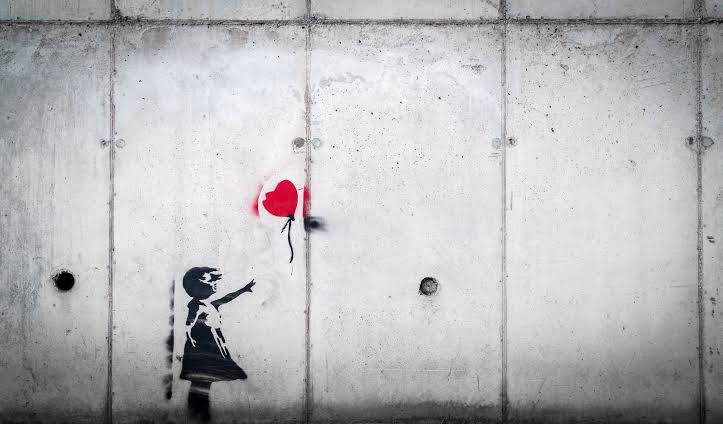
There’s a beauty to life on the mission field that defies words. It is not found in the obvious, but in the quiet, sacred moments that linger like a melody. It is the kindness of strangers who appear when you least expect it, arms full of gifts from their gardens—a bunch of bananas, a fresh pineapple, a smile that reaches their eyes. It is the shared silence over a pot of kaukau, the quiet prayers spoken in unity under a blanket of stars, and the rustling of the wind through tall grass as if the earth itself is breathing alongside you.
In Papua New Guinea, joy wears a different face. It is a choir in perfect harmony on a church lawn, voices rising and falling in a hymn that carries your soul somewhere beyond yourself. It is the riot of flowers along the roadside – lupines laying out welcome mats at the foot of mountains and frangipani spilling their perfume into the humid air. It is the adventure of traveling to hidden places, untouched by the heavy hand of progress, where lakes gleam like glass and mountains stand as sentinels to a simpler, purer world.
Life there is steeped in depth and creativity, born of necessity. There are no quick fixes, no dashes to the store when the eggs run out. Instead, there is the art of making do or doing without—kneading dough by hand, stitching torn fabric, or crafting beauty from what is at hand. The slow rhythm of this life teaches patience and gratitude in a way that no sermon ever could.
But there is another side to this life, one that comes with its own burdens. In PNG, my white skin attracted a kind of celebrity I never asked for. It brought curious stares, unspoken assumptions, and a weight of expectation that made solitude both a blessing and a curse. There were days I felt like an alien, isolated by my otherness, even as I worked to belong. Yet, even “home”, my otherness continues to separate me.
Repatriation is a strange and silent grief. For many returning missionaries, the pain of leaving the field is like losing a part of themselves. Often, it comes without choice—due to health concerns, immigration issues, or even a global pandemic. Other times, it is voluntary, but even then, the grief clings to you. The bustling, convenient modern world feels sterile in comparison. Shopping malls, with their bright lights and endless choices, seem filled with people wandering aimlessly, unaware that another world lives inside of you.
In this new life, fast food replaces slow, intentional meals, and busyness fills every corner of existence. Yet my heart often longs for the simplicity of the mission field, where life was stripped bare and real, where every day carried purpose and where relationships held weight and meaning.
Coming “home” is never just a return; it is an ache, a fracture, a longing for what was left behind. It is stepping into a world of privilege and distraction while carrying the weight of everything you have seen, heard, and felt. I look around at my life now, at the conveniences and comforts, and I feel both grateful and hollow.
The grief of leaving PNG has made me more intentional in my relationships. I treasure the time I spend with family and friends, aware that life in this world is fleeting and fragmented. Yet, there are days I wonder if my heart will ever truly return from PNG. It feels as though I left it there, tucked beneath the hills, washed in the rushing mountain springs, or carried away in the chorus of an early morning lotu.
Life on the mission field changes you. It strips away the trivial and teaches you what it means to live with both hands open—to give, to love, and to trust in a way that feels almost impossible now. And though I wrestle with grief, though the weight of returning feels insurmountable some days, I cling to the hope that this loss has a purpose. That even in the aching, I am being refined.
For those of us who have left the field, it’s important to name the grief and acknowledge its depth. To be kind to ourselves in this season of in-between. To know that our hearts, though fractured, still beat with purpose. And to trust that God, who called us to these places and experiences, is still working all things for good—even when we feel like pieces of ourselves remain scattered across the world.I
may never retrieve the part of my heart that remains in PNG. Perhaps I’m not meant to. Not yet. Perhaps it is a reminder of the sacredness of the life I lived there—a life that taught me the truest meaning of beauty, creativity, and love. And in the end, perhaps that is enough.
-
The light that calls me back
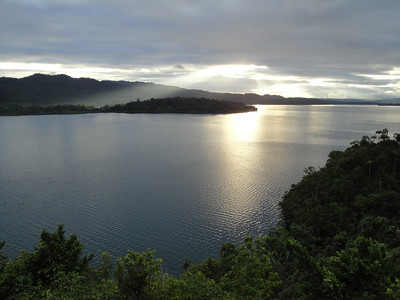
It is easy, sometimes, to be swallowed by the dark. To let the weight of what was painful drown out the echoes of joy. But someone reminded me recently: do not forget the light. Do not forget the reason your heart still aches for the place you left behind, why you dream in the colors of the highlands, why you still whisper the names of friends into the quiet spaces of your prayers.
PNG changes you. It does not leave you untouched. It presses into your spirit like rain into dry earth, reshaping you, flooding the cracks, making something new. And for all the hardship, for all the things that hurt, there was so much light.
I remember the friendships that bloomed in that rugged, untamed land. The faces that met mine with warmth, with laughter, with hands that offered fruit and flowers and welcome. I remember stepping into homes made of woven walls and thatched roofs, where I was given the best seat, the first plate, the widest smile. Where hospitality was not measured by riches, but by the open-hearted way love was given, freely and without condition.
And I remember God—how near He felt. How the mountains seemed to hum with His presence, how the rivers carried His voice, how the sunsets painted the sky with a glory too breathtaking to be coincidence.
The work was hard, and the challenges relentless, but in the midst of it all, I felt held. Because what we did mattered. Because lives were being changed. Because in the eyes of the people we served, I saw something holy—something raw and real and closer to the heart of God than any church building could contain.
I miss it. I miss the sky so wide it felt like eternity stretching open. I miss the dirt roads and the scent of burning wood and the way the rain came in sheets so thick the world disappeared. I miss the way creativity poured out of me there, how my soul felt awakened in a way I have never quite been able to replicate.
PNG is not just a place. It is a transformation. It strips you down and builds you anew. It is where I was challenged and broken, but also where I was found. And though I left, though I had to walk away, it still calls me. The friendships, the beauty, the sense of purpose—I carry them with me, woven into the fabric of who I am.
I will not forget the hard things. But neither will I forget the light. Because the light is what calls me back.
 Girl Kaleidoscope